
WHOcc
Overview

Title of the center: WHO Collaborating Center on Patient Safety Policies and Strategies
Institution: Saudi Patient Safety Center
Director: Dr. Ali Asery
Address: Kingdom of Saudi Arabia – Riyadh - PO. Box 9264 - Postal Code 11588
WHO Region: EMRO
Date of Designation: 22/3/2020
Terms of Reference:
- To support the implementation of the WHO Global Patient Safety Challenge(s) with primary focus on medication without harm, through capacity building in Low- and Middle-Income Countries (LMICs)."
- At the request of WHO and its Member States, develop electronic tools to assess, measure, and improve the "Patient Safety Culture
- To support WHO's patient safety priorities through capacity building on the role of health professionals in promoting safer care
- To support WHO programs that aim at promoting patient empowerment & community engagement for ensuring safer care, through the collection of lessons learned from patient safety initiatives
C.Safety culture surveys can be used to:
1- Raise staff awareness about patient safety as a national theme.
2- Diagnose and assess the current status of patient safety culture.
3- Identify strengths and areas for patient safety culture improvement.
4- Examine trends in patient safety culture change over time.
5- Evaluate the cultural impact of patient safety initiatives and interventions.
6- Conduct internal and external comparisons through the permitted use of SPSC-database for HSPSC.
In addition to what mention above, participation in SPSC national project (AHRQ- hospital survey on patient safety culture) will enable you to:
7-To have a dedicated account per hospital at the survey portal.
8-Use official AHRQ dual languages survey (Arabic & English)
9-The survey has a friendly access through the website and mobile.
10-Data cleaning, verification, and analysis of all survey components.
11-Holistic facility report with a comparative result to a national database.
12-Summary report for strengths and areas for improvement
13-Assigned help disk from SPSC for continuous follow-up and assistance
14-Have real-time monitoring and follow-up feature to monitor the progress of the survey in the hospital by the survey leader.
15-Obtain electronic survey link and barcode dedicated to each participated hospital.
16-Obtain the survey registration user-guide.
17-Access to executive annual report for each cycle.
18-Ability to benchmark your results with the national results and other similar entities all over the Kingdom.
19-Ability to retrieve previous reports (within the same platform)
20-Ability to access the national recommendations.
Status: Ongoing
Frequent consecutive and focused consultations were held in cooperation with representatives of the Pakistan Ministry of Health to assist in the technical and scientific aspects necessary to implement the Hospital Survey on Patient Safety Culture at national level.
The SPSC-WHOcc held a focused training for 42 representatives from experts in quality and patient safety from different healthcare sectors in Pakistan entitled "Strategies to Establish and Implement (HSPSC) at National Level
%20Training%20session%20registration.jpg)
Frequent consecutive and focused consultations were held in cooperation with representatives of the Sudan Federal Ministry of Health (S-FMOH) in the Republic of Sudan to assist in the technical and scientific aspects necessary to implement the Hospital Survey on Patient Safety Culture at national level.
A training session titled
"Strategies to Establish and Implement (HSPSC) at National Level" was held for the survey leaders on how to prepare for the development and implementation of the survey at the national level, enhance the engagement strategies of the healthcare providers, highlight priorities and areas for improvement, build corrective action plans, and measure and enhance hospital survey on patient safety culture.
%20-%20Sudan.jpg)

%20(2).png)
.png)
%20(1).png)

.jpeg)
.jpeg)

.png)

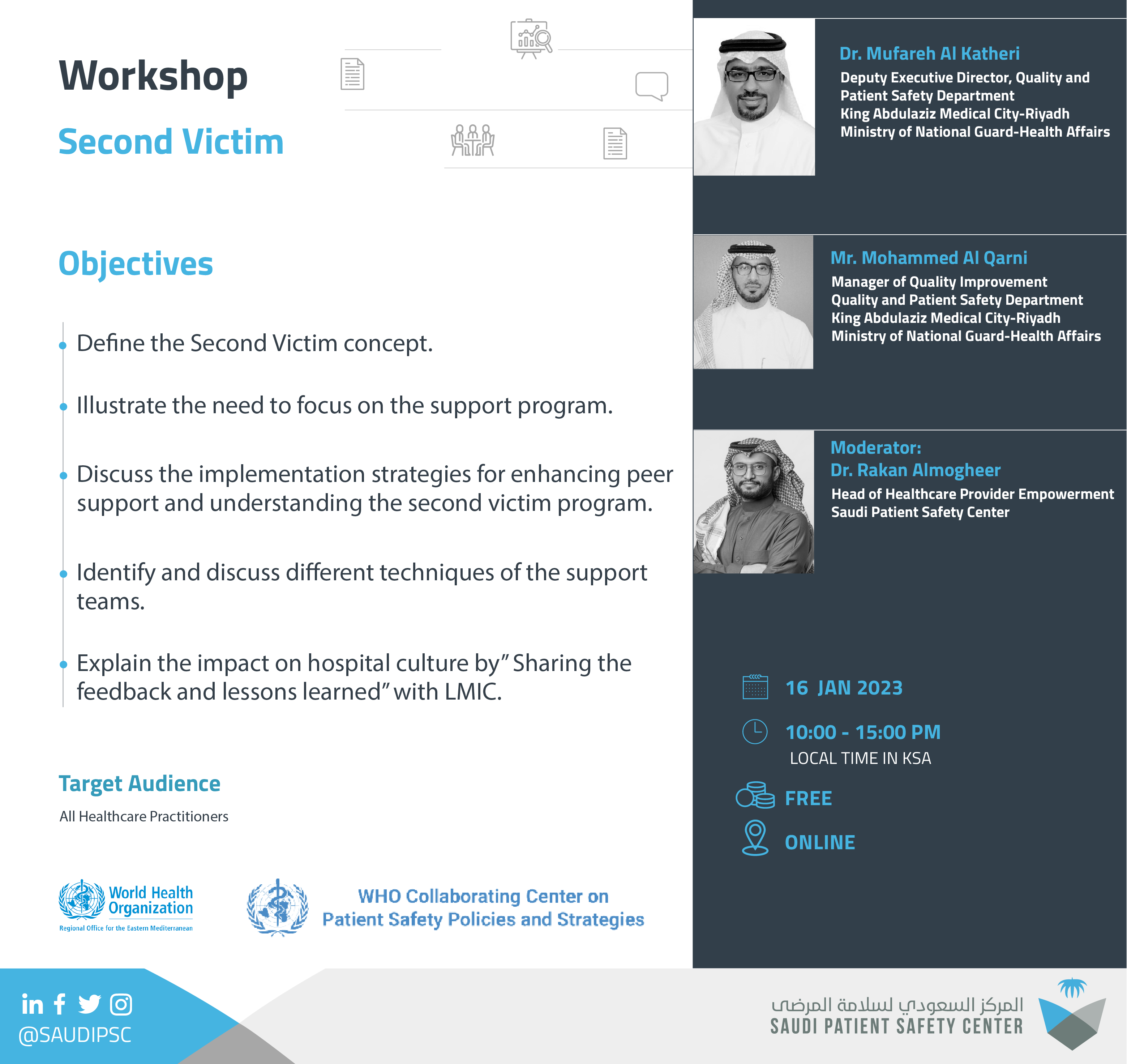
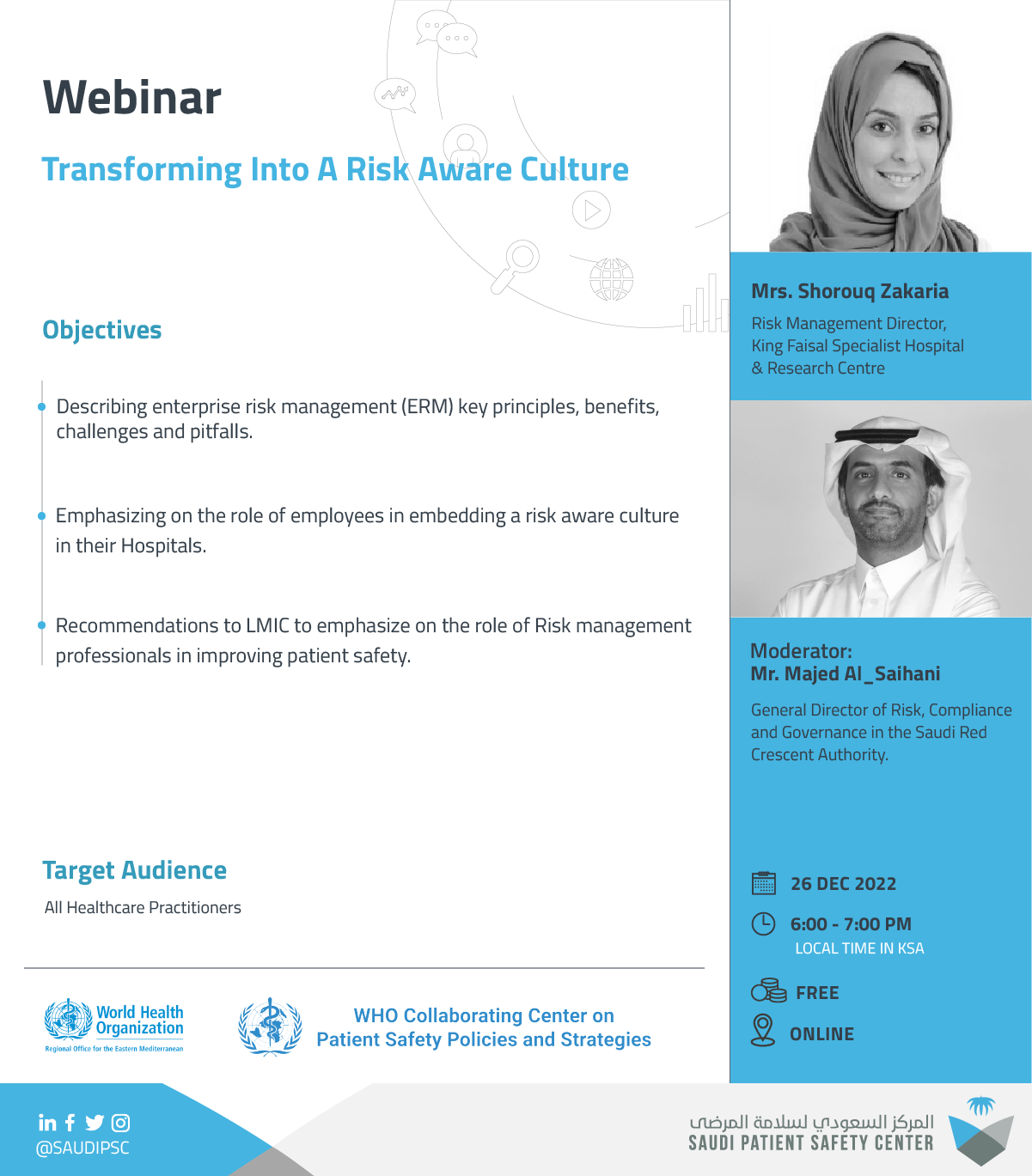
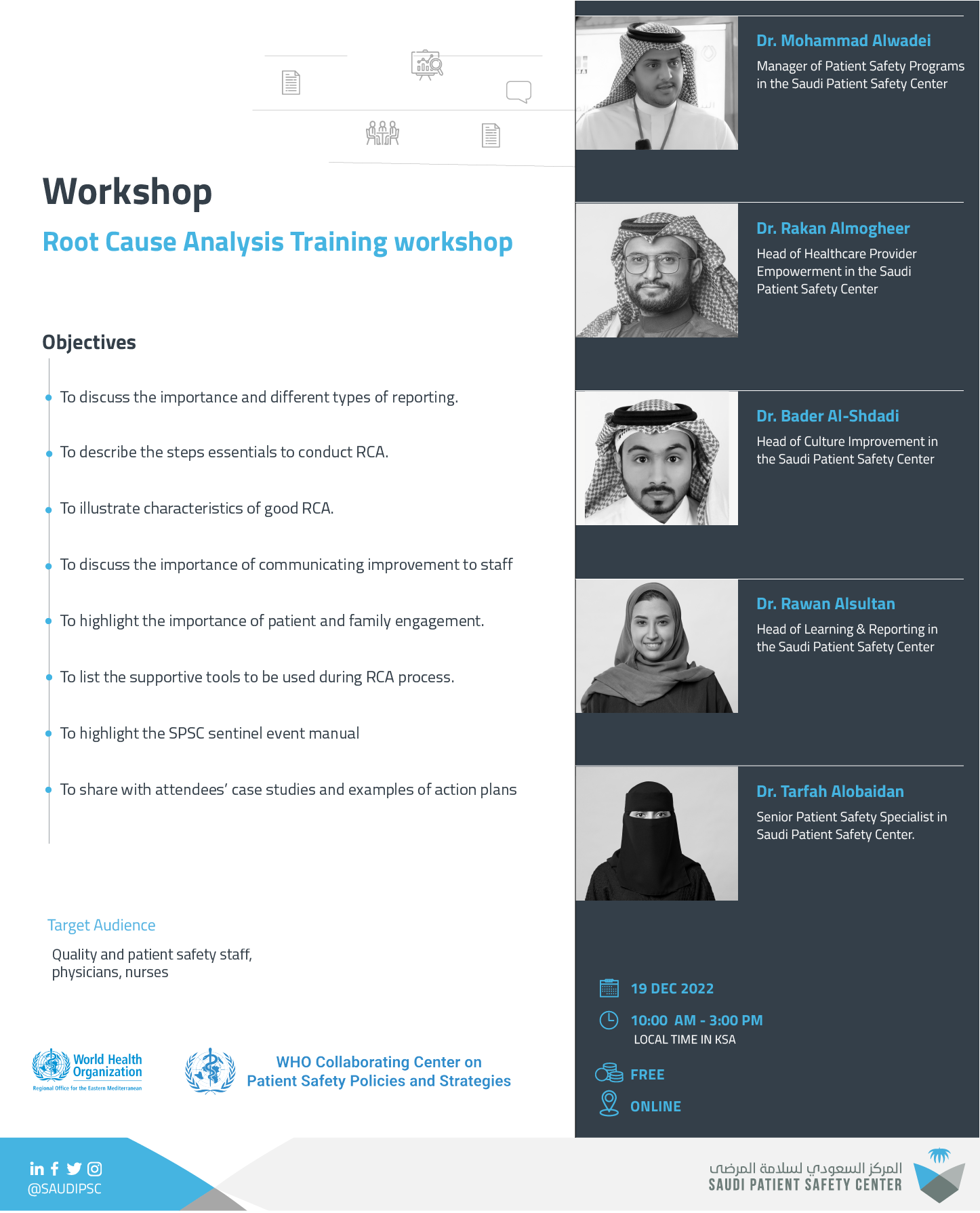
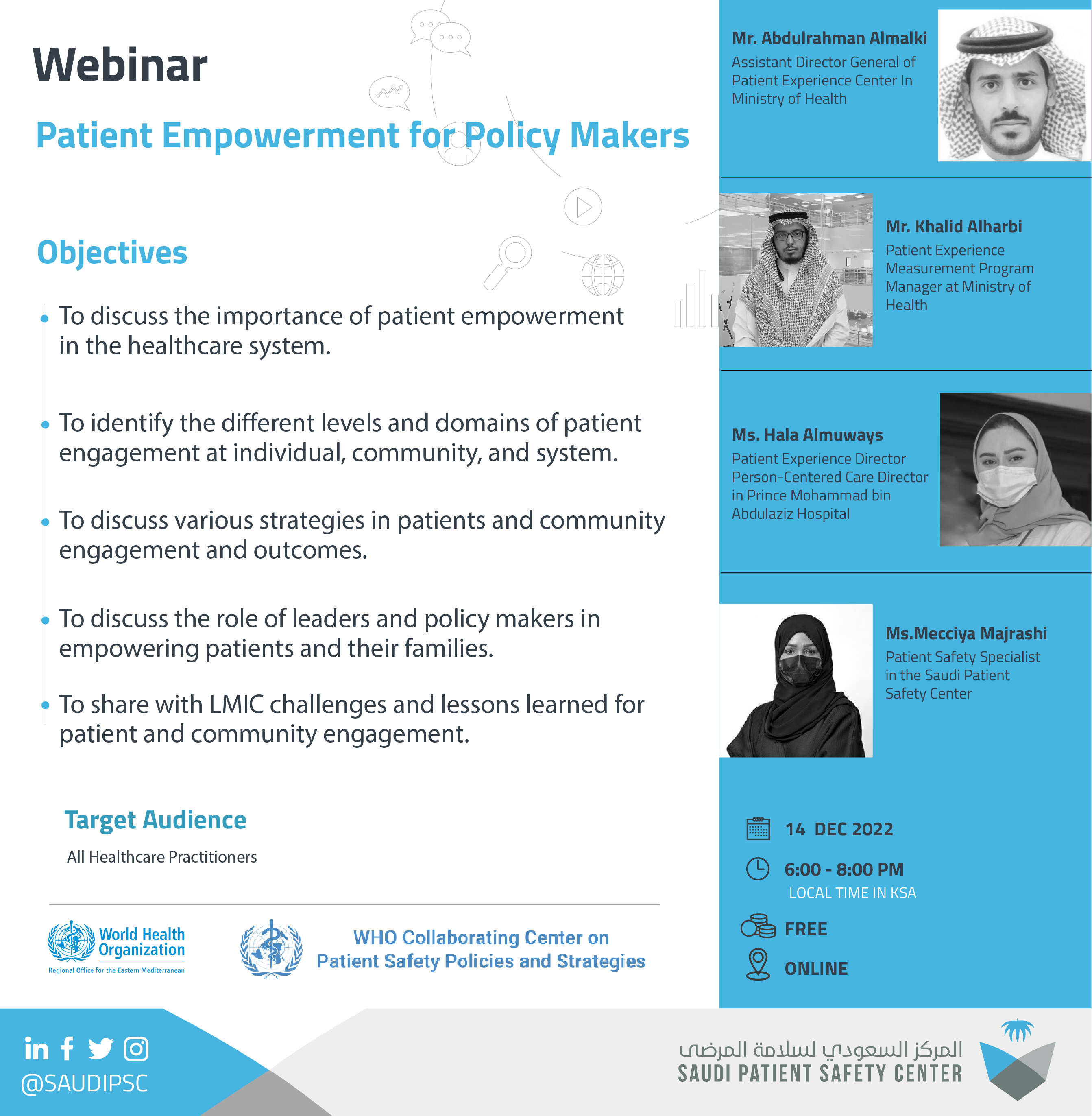
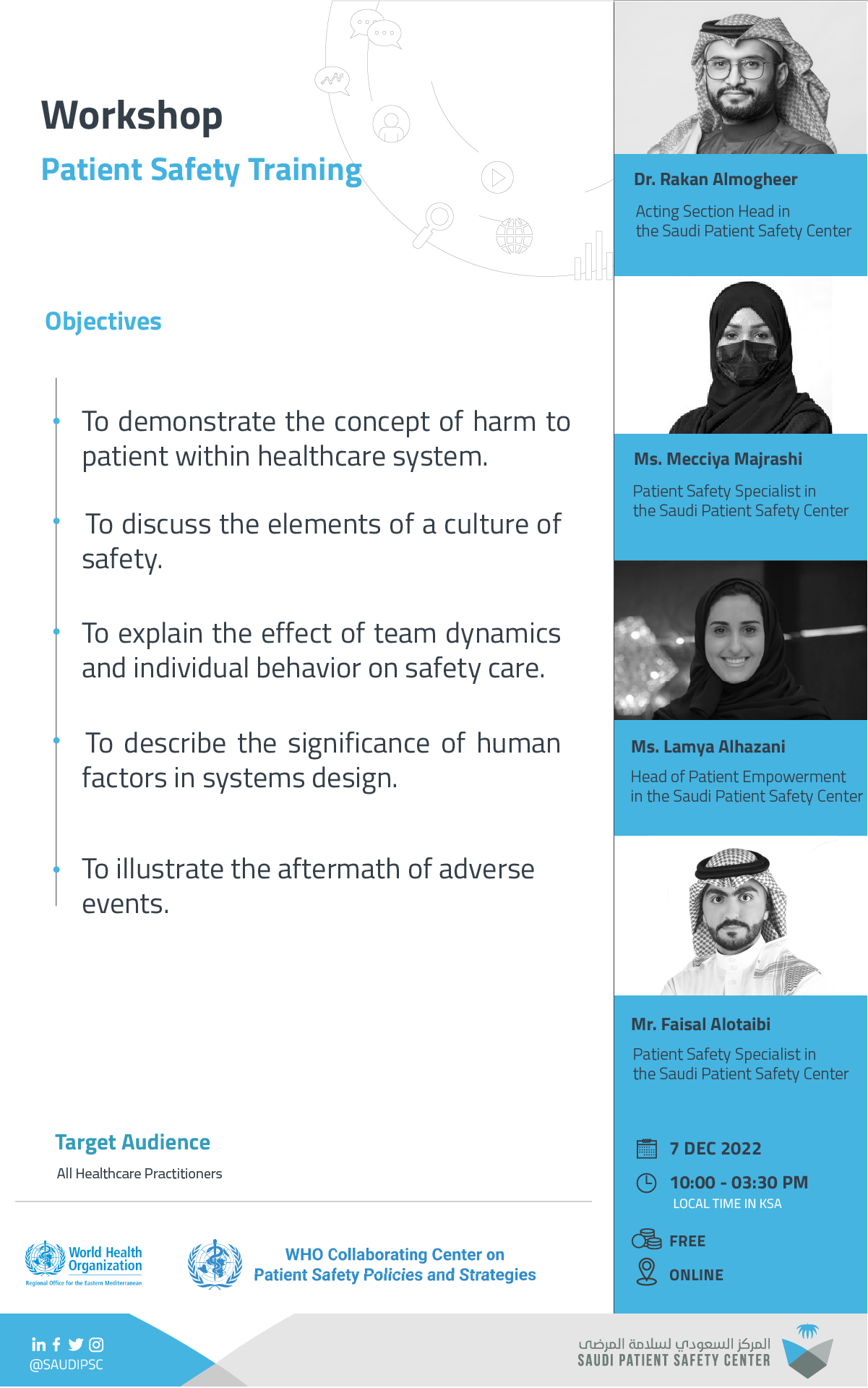
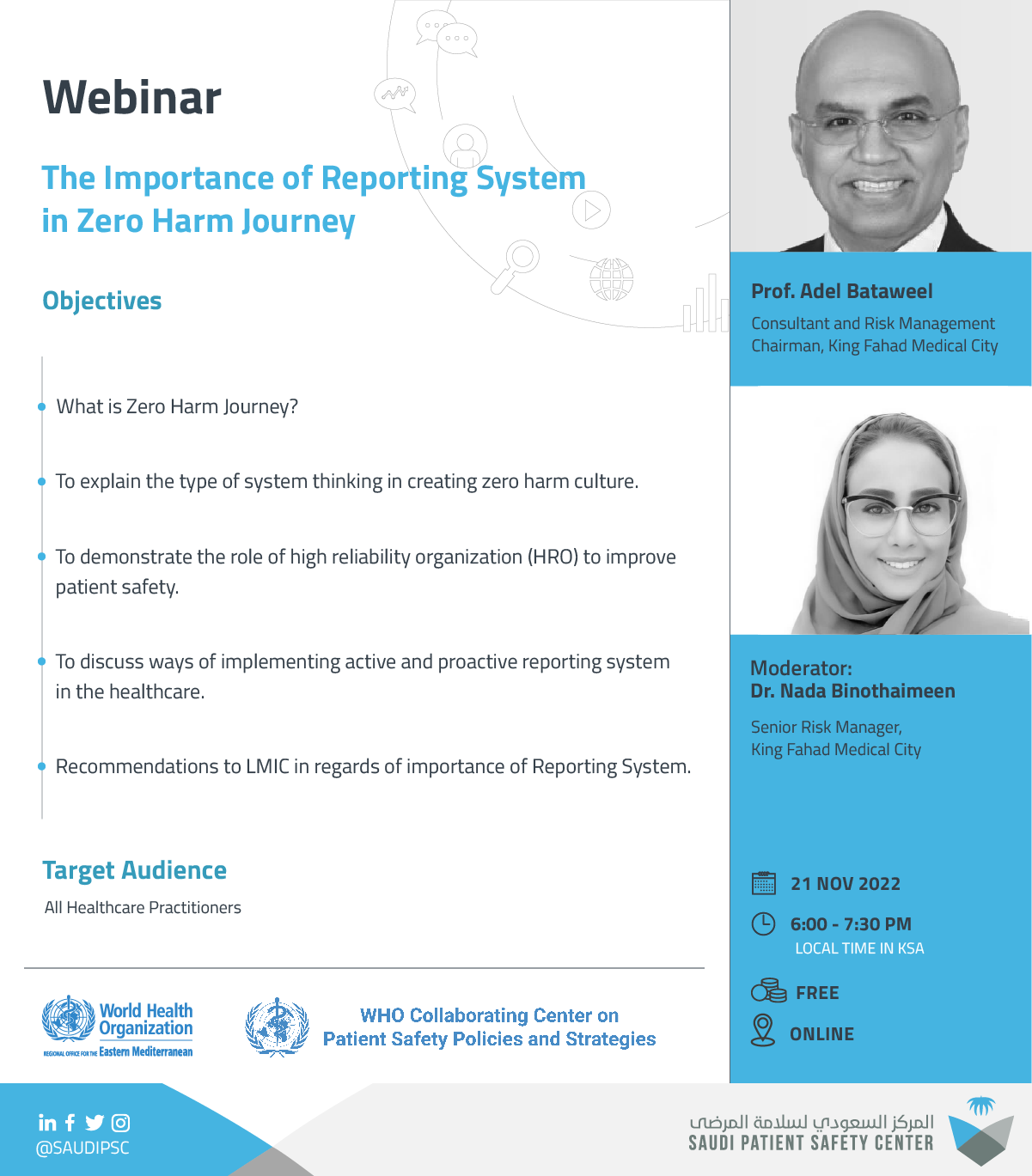

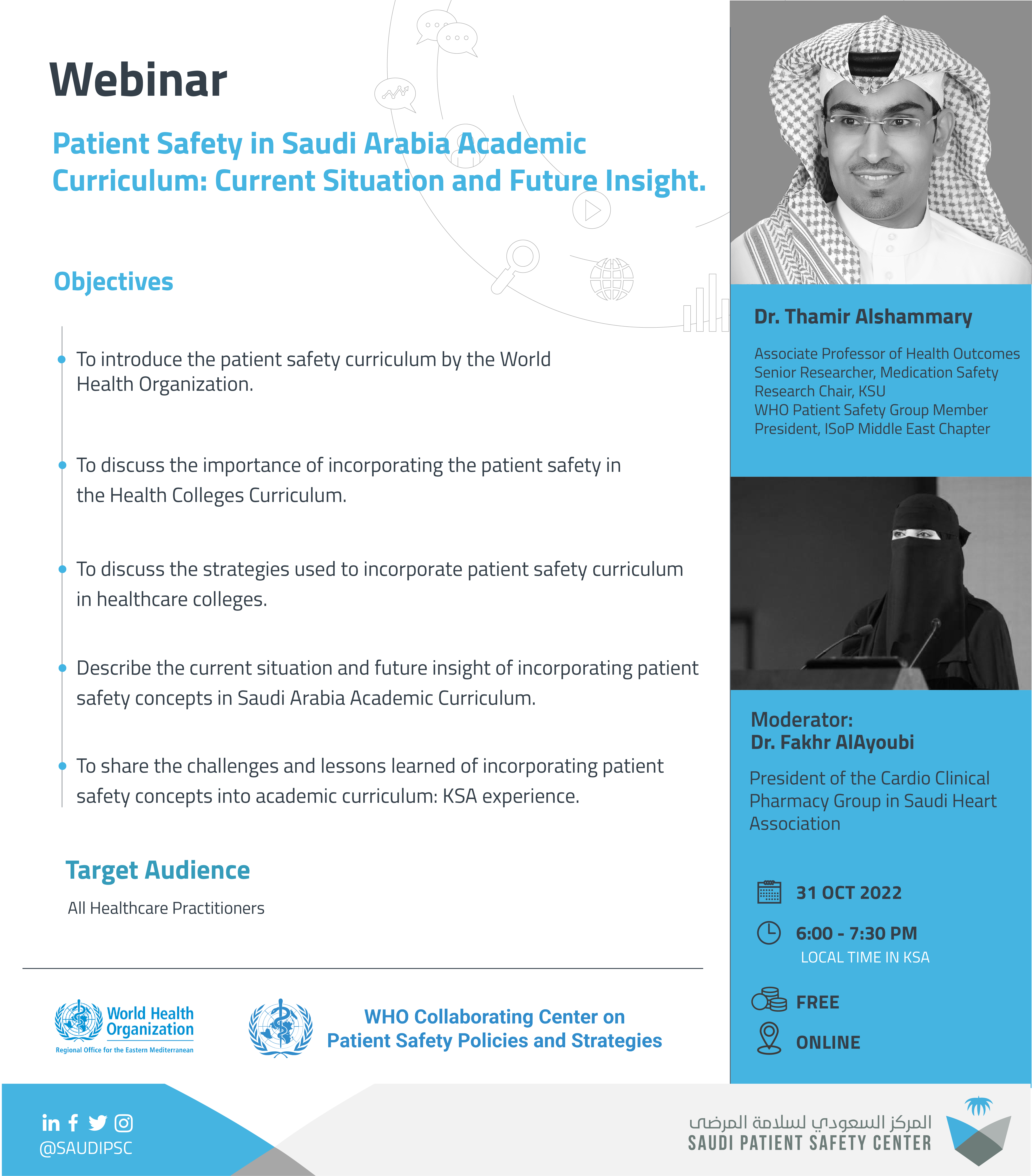
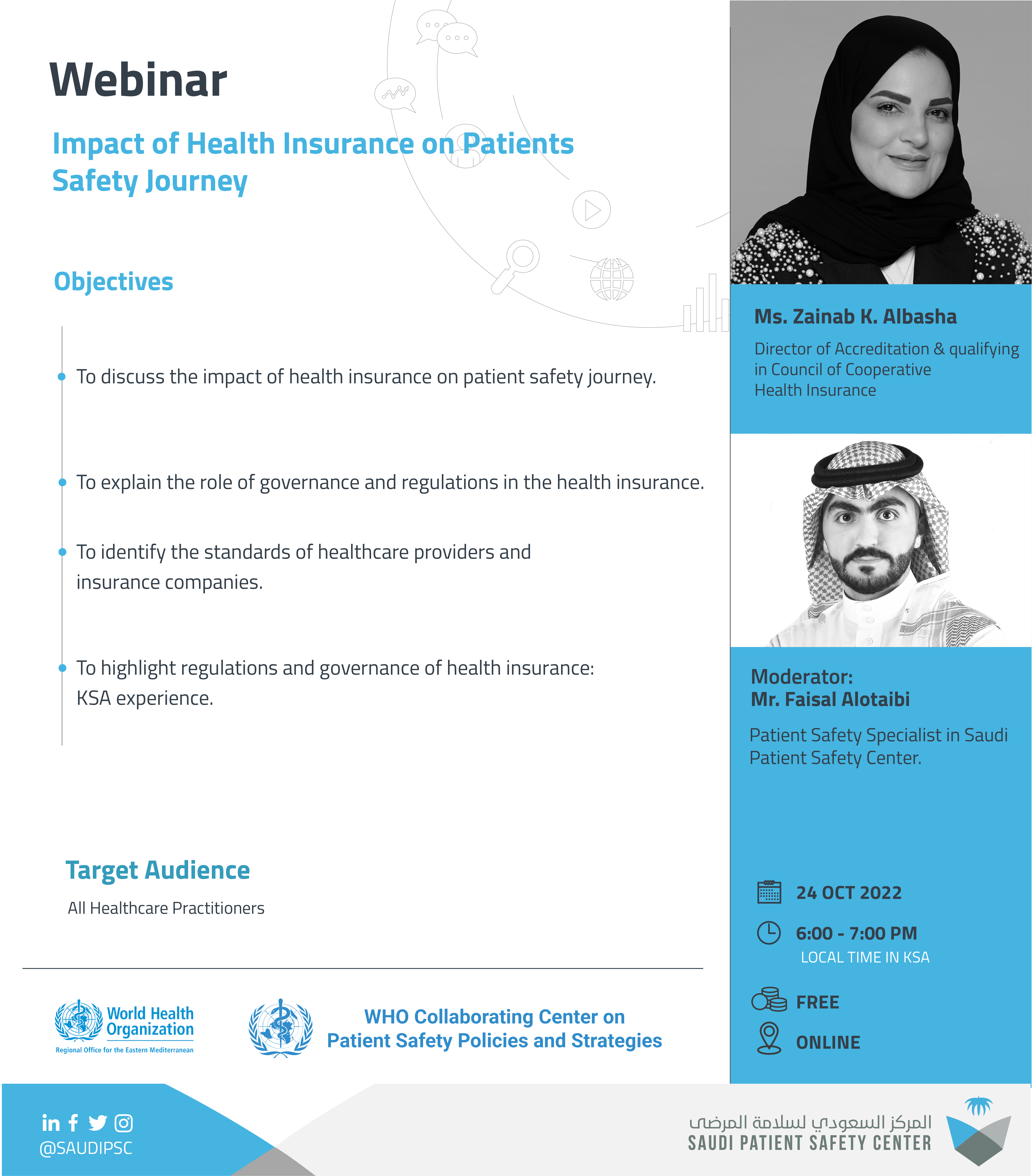
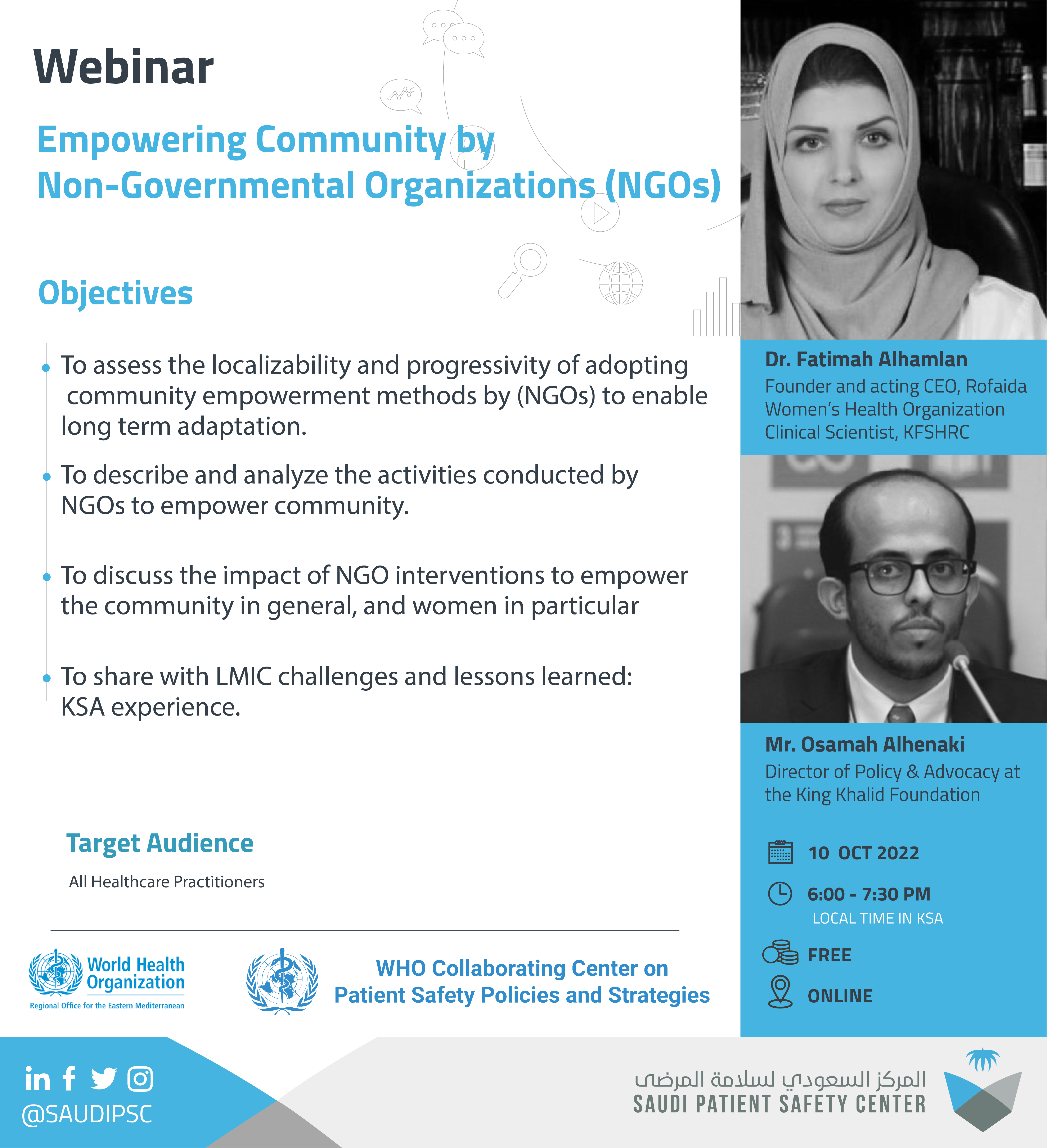
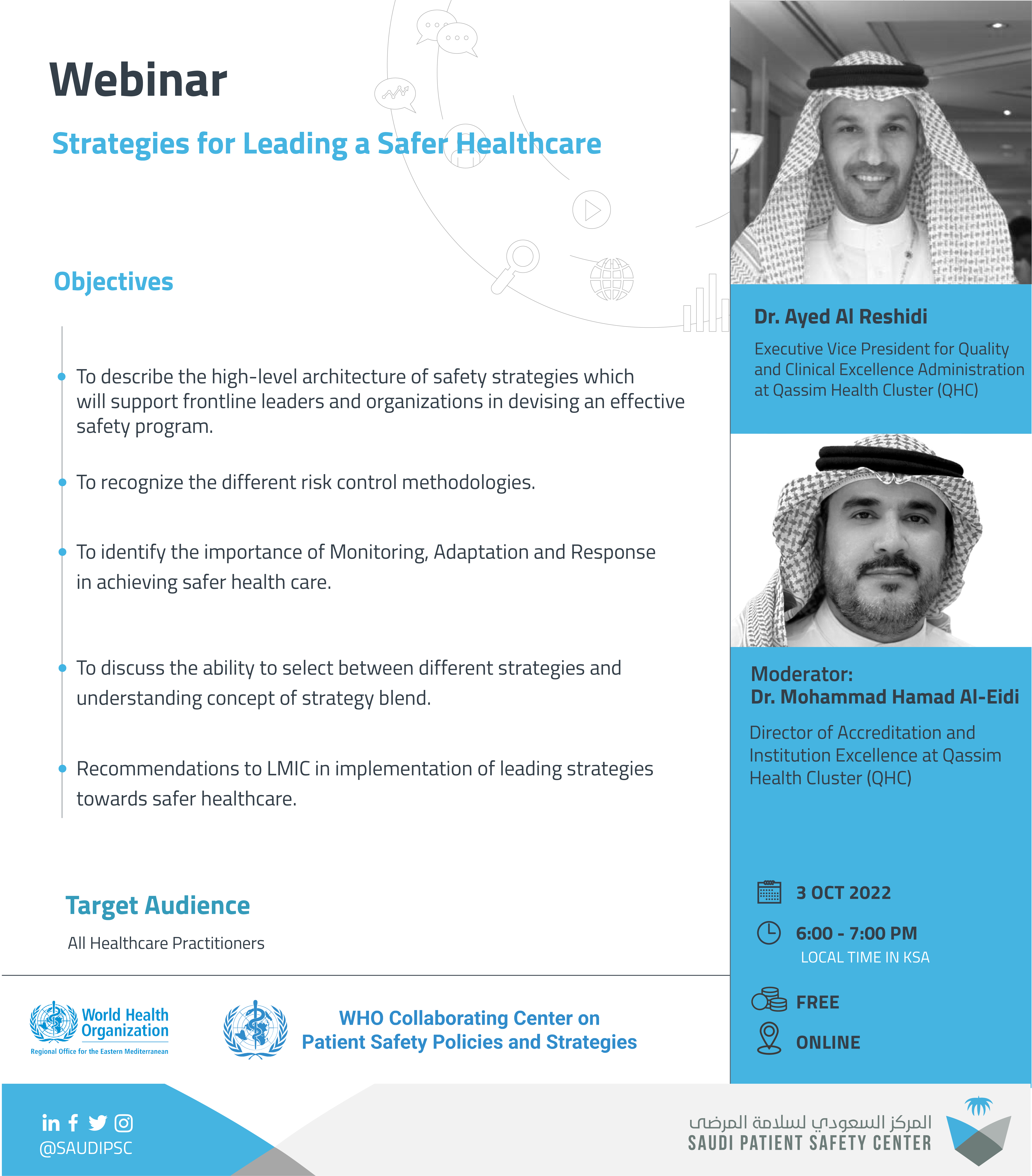
.png)
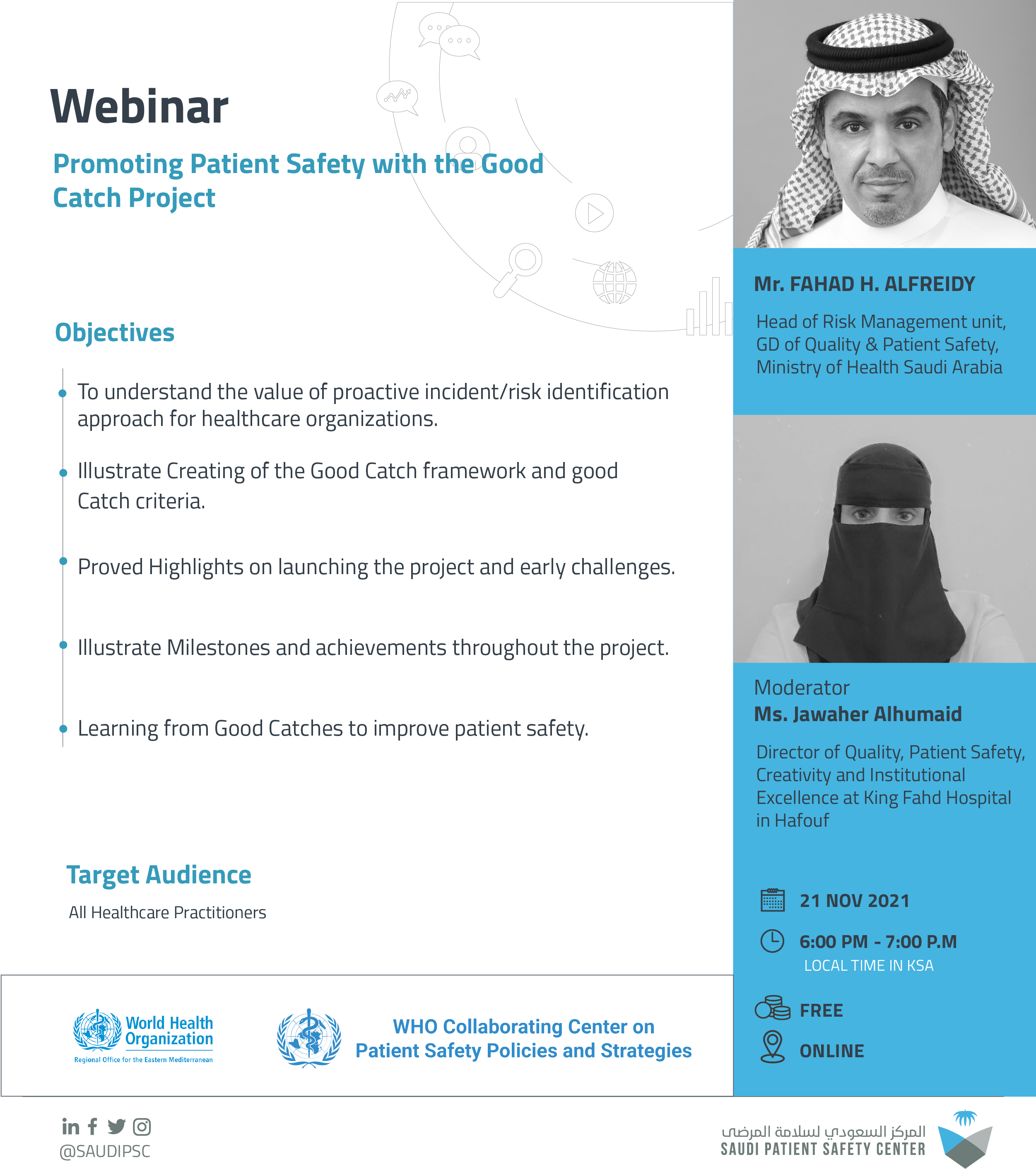
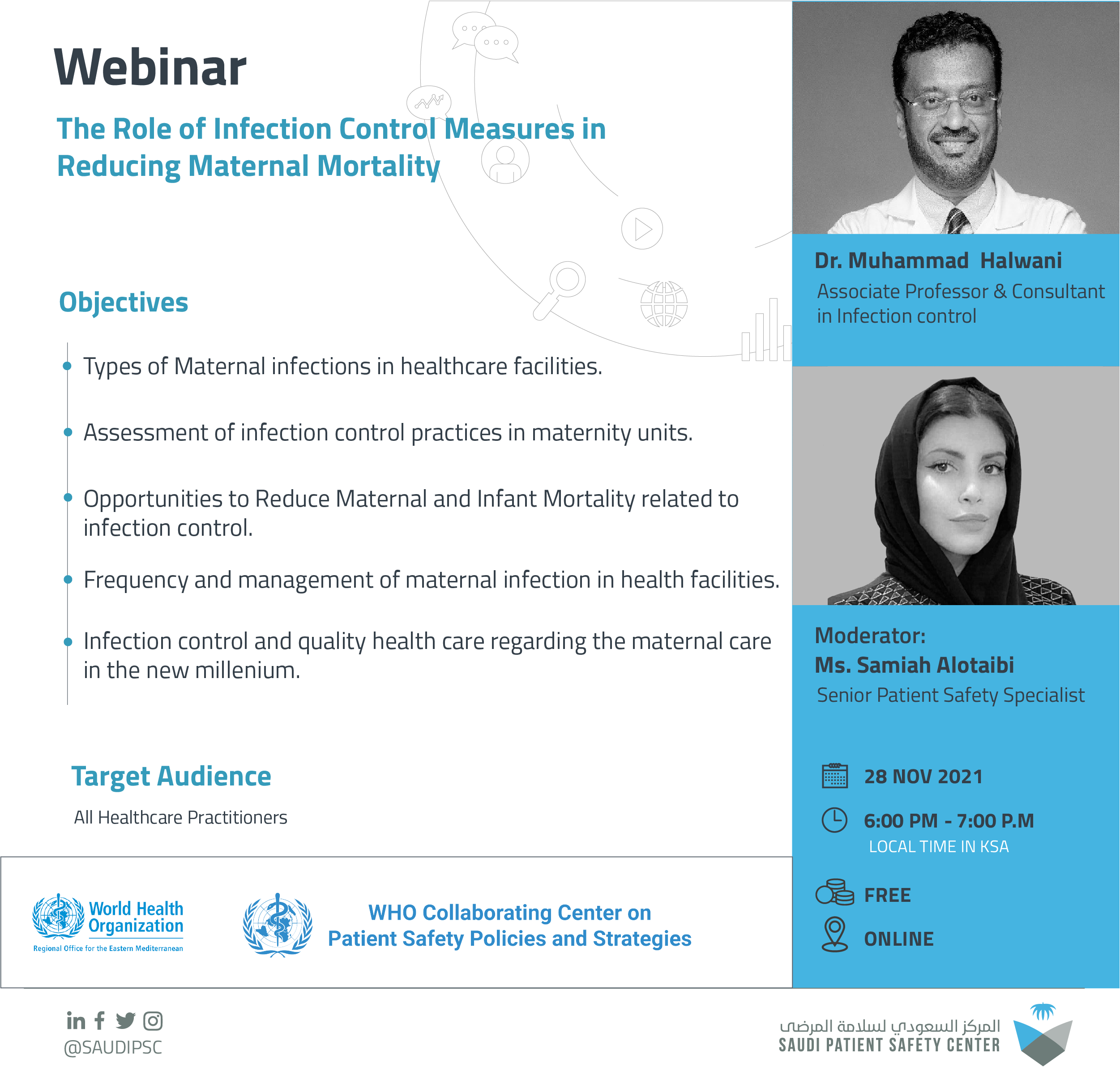
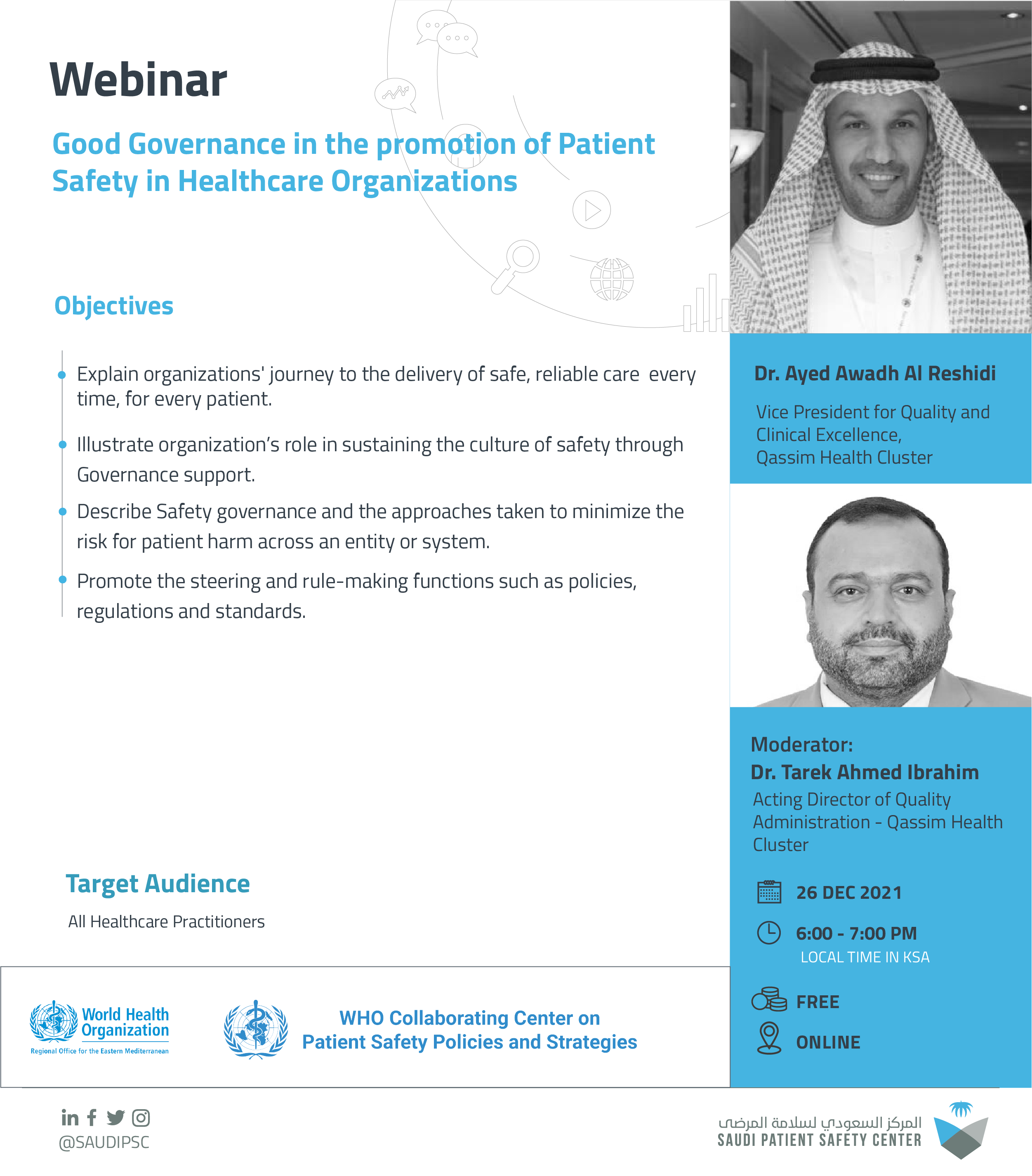
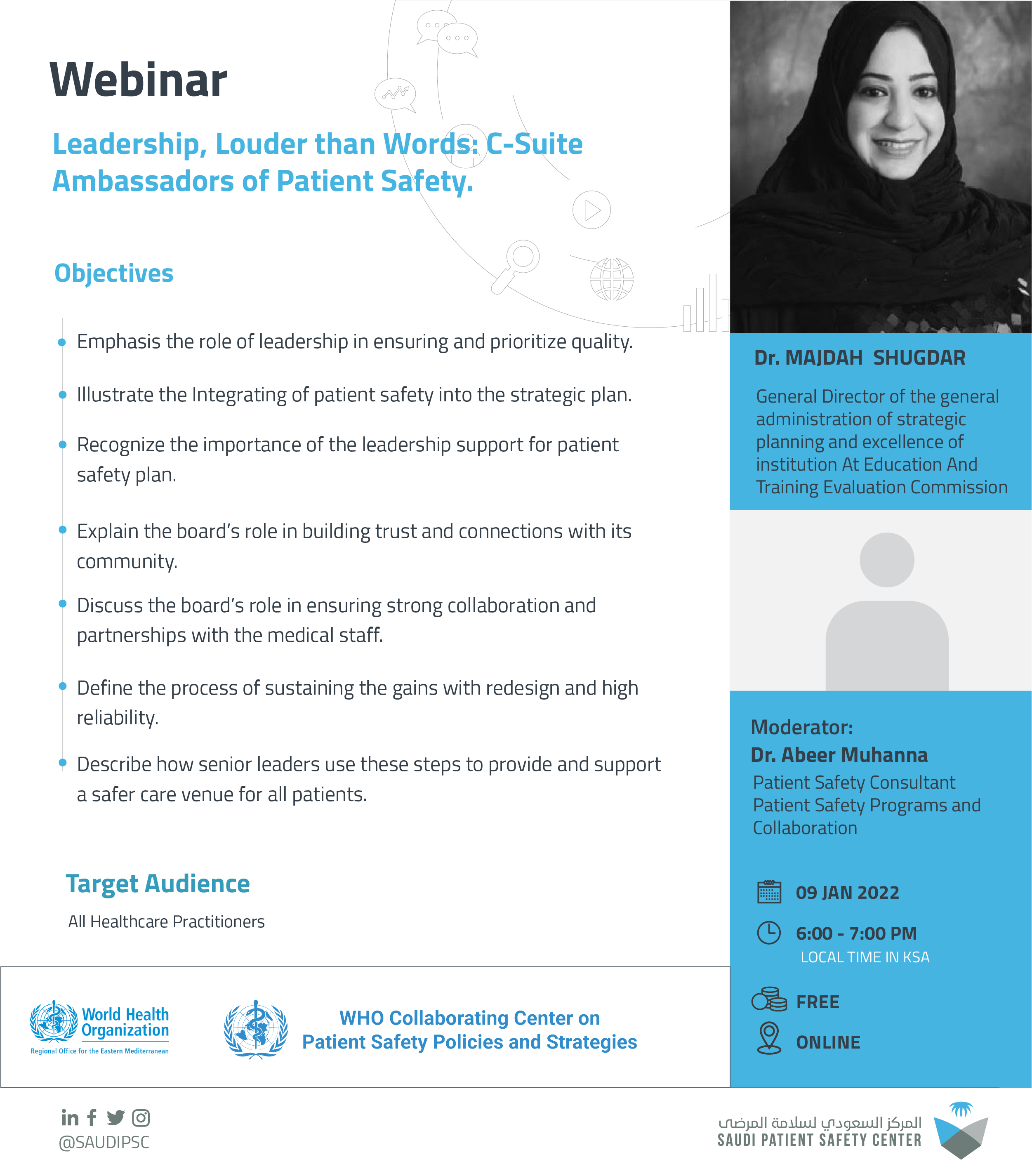
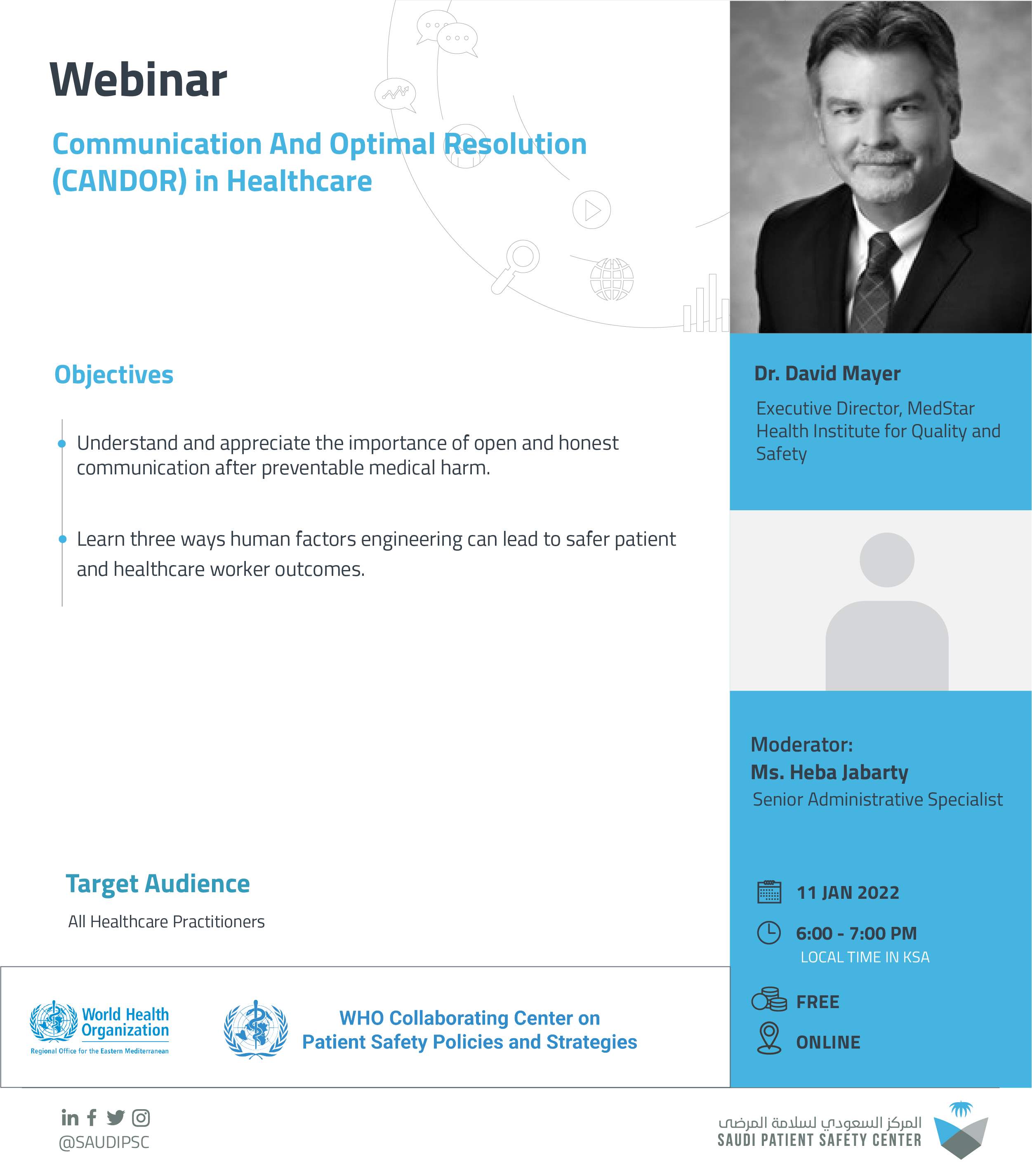
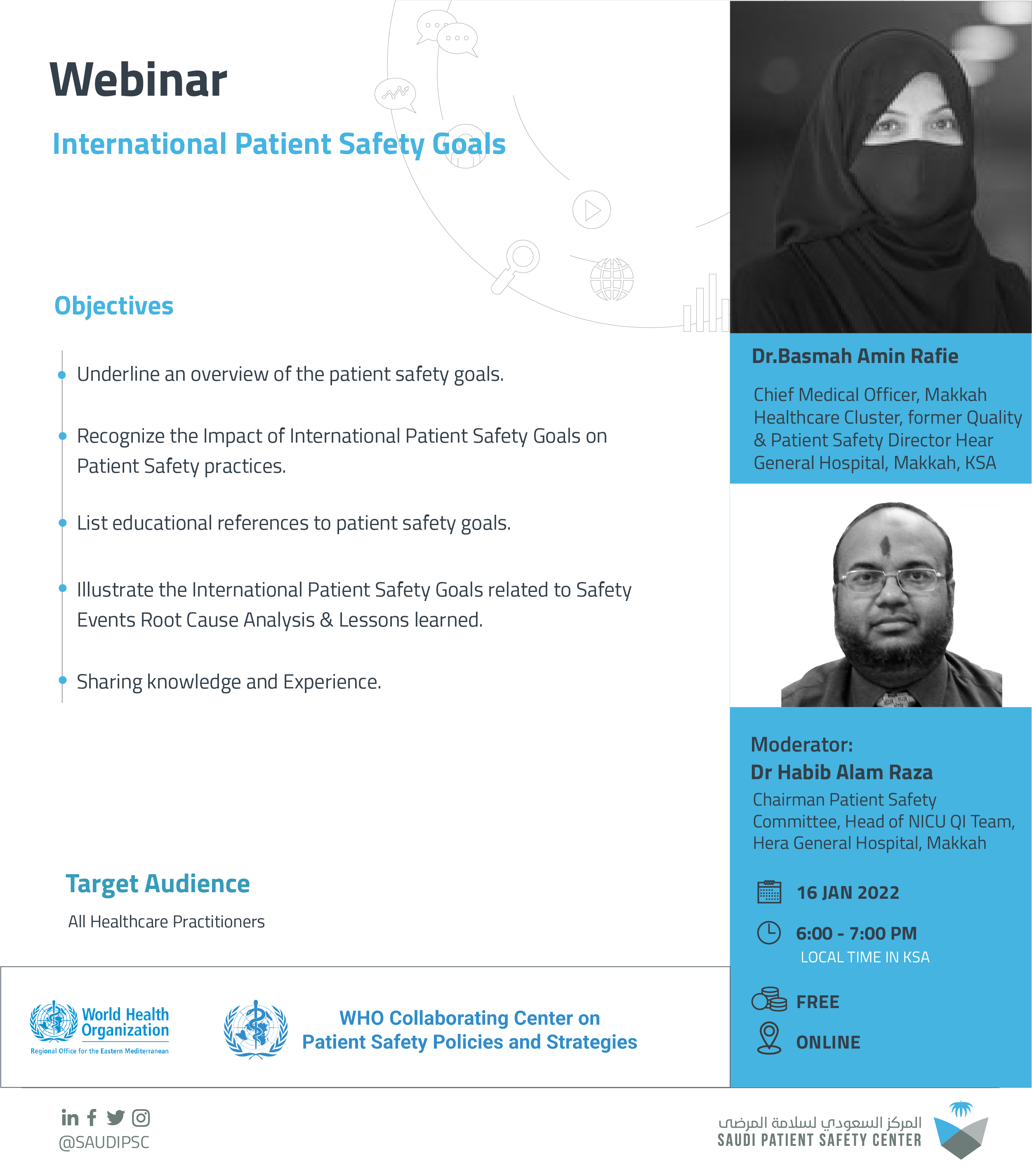
.png)
.png)
.png)
.png)
.png)

Introduction:
“The aim of the Global Patient Safety Challenge on Medication Safety is to strengthen medication safety by improving the health systems that minimize medication-related harm by 50%, globally in the next 5 years. “The third WHO Global Patient Safety Challenge: Medication Without Harm will propose solutions to address many of the obstacles the world faces today to ensure the safety of medication practices. WHO's goal is to achieve widespread engagement and commitment of WHO Member States and professional bodies around the world to reducing the harm associated with medication"
In healthcare systems throughout the world, unsafe medication practices and medication errors are the primary sources of avoidable harm. Low-and middle-income countries experience this harm at variable levels and in different ways—the annual cost of medication errors is estimated to be 42 billion US dollars worldwide4. The Saudi Patient Safety Center (SPSC)- WHOcc on Patient Safety Policies and Strategies working with experts, partners, and WHO-EMRO to deliver training activity series to support the WHO Global Patient Safety initiatives with a focus on Low- and Middle-Income Countries (LMICs), and one of the five strategic activities assigned to SPSC-WHOcc is Medication Without Harm, in alignment with the 3rd WHO Global Patient Safety Challenge.
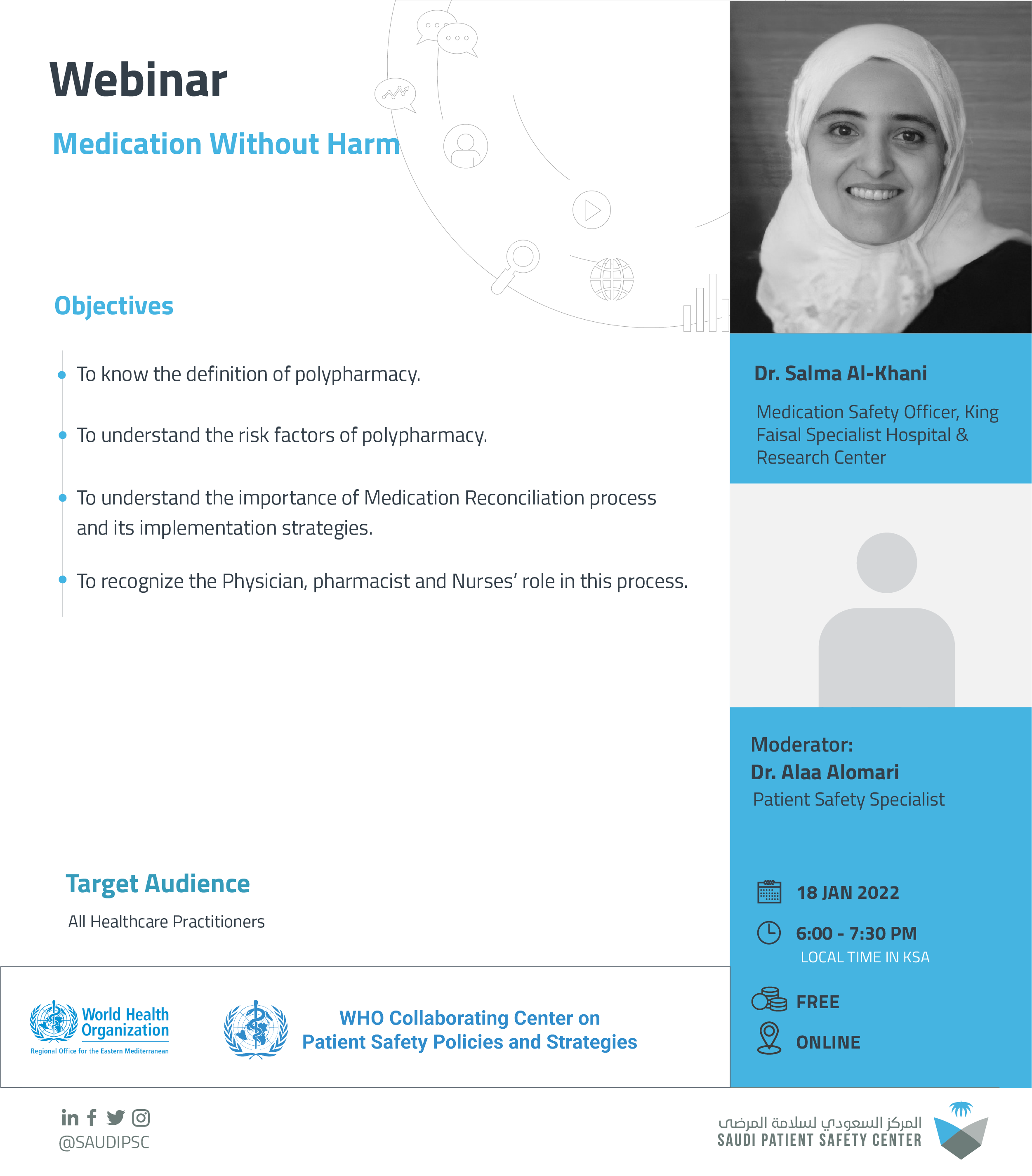
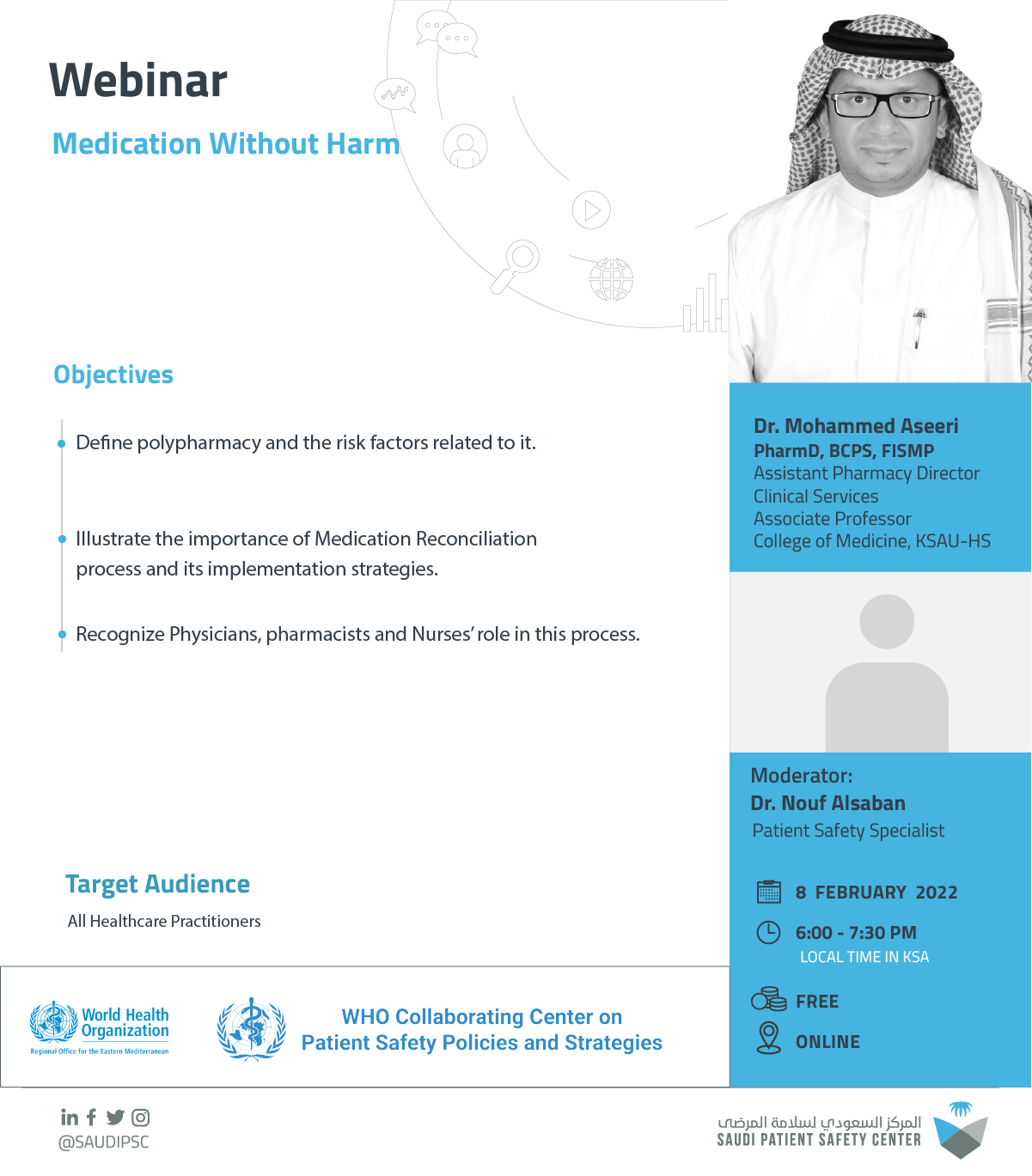
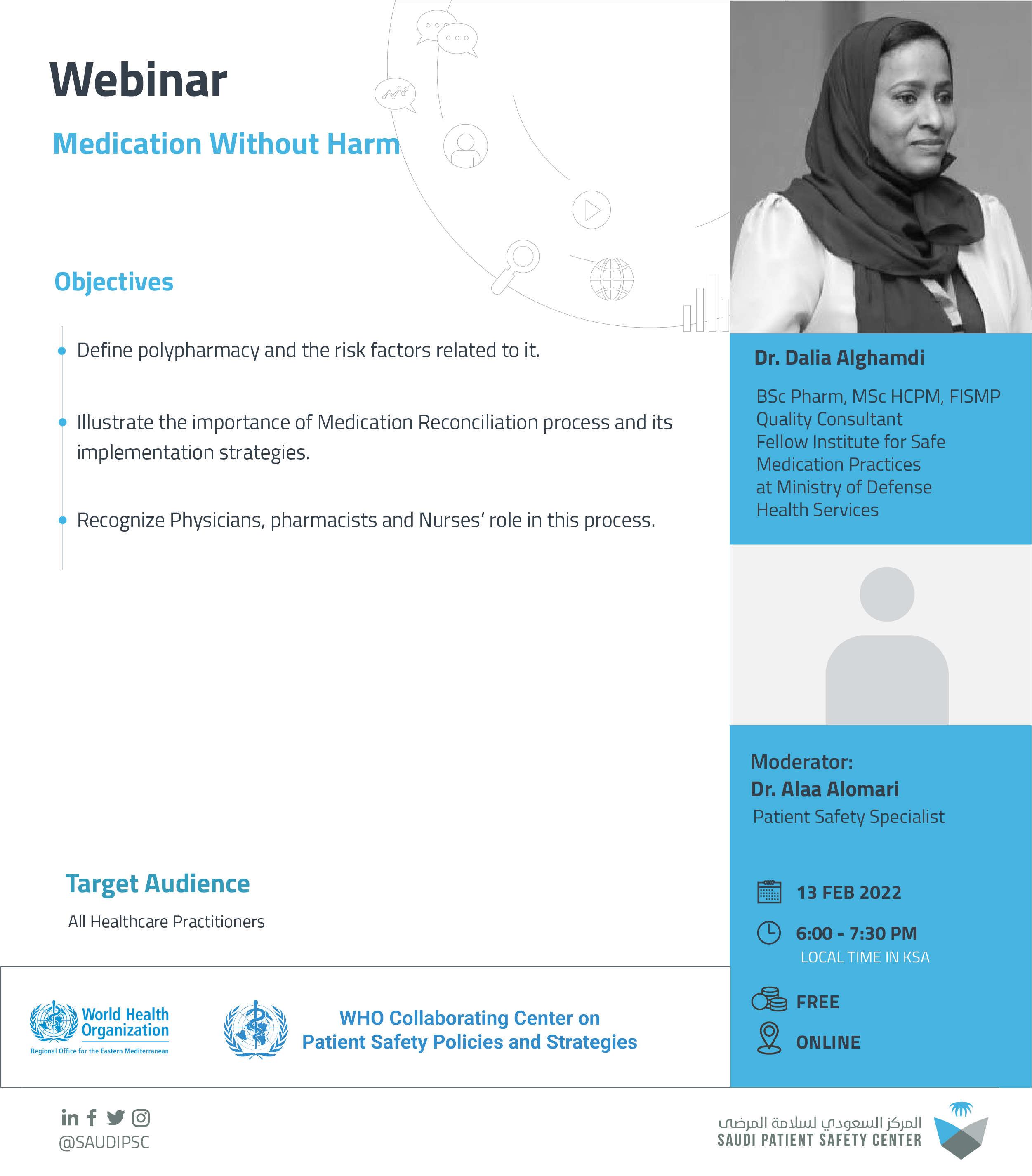
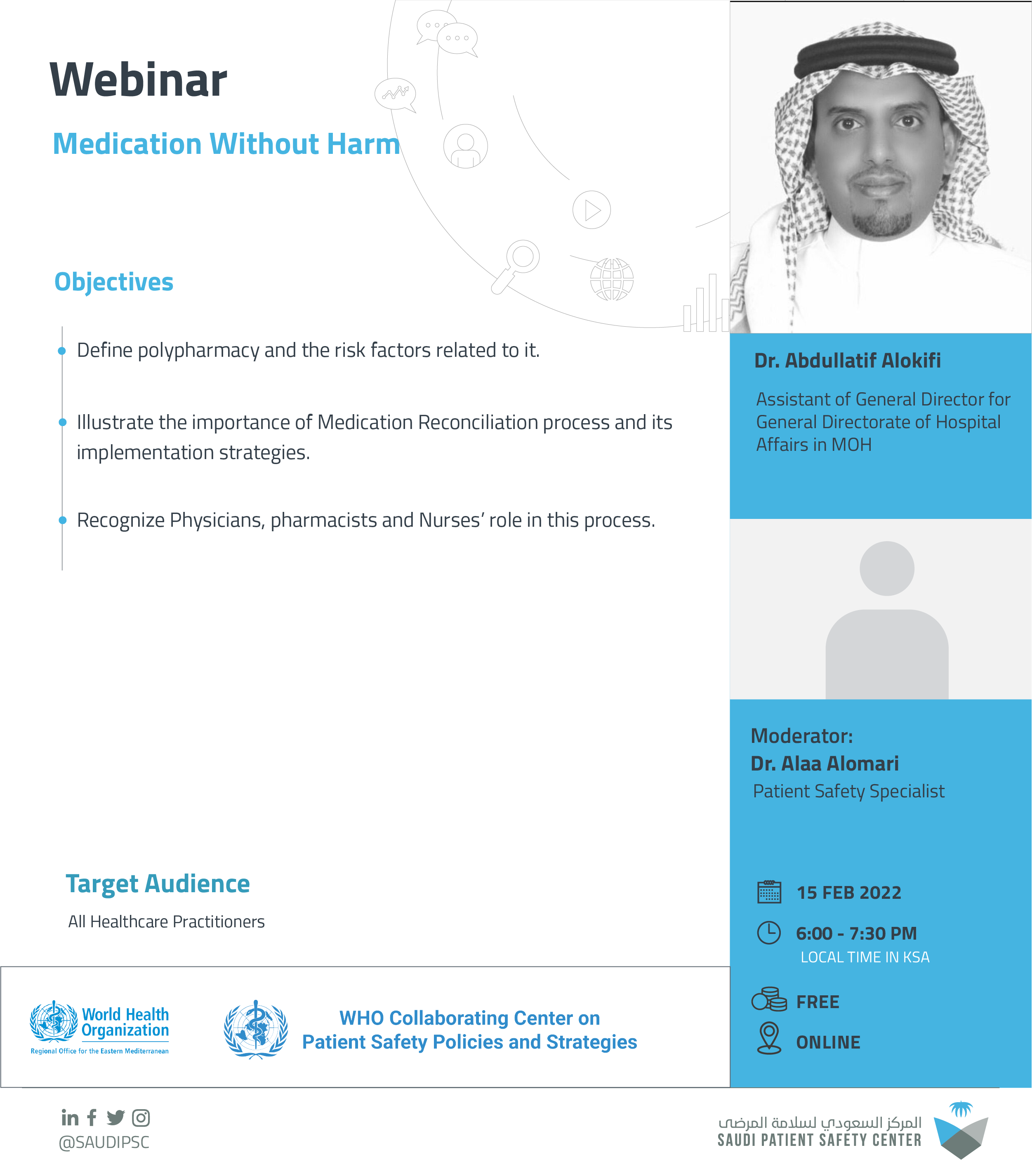
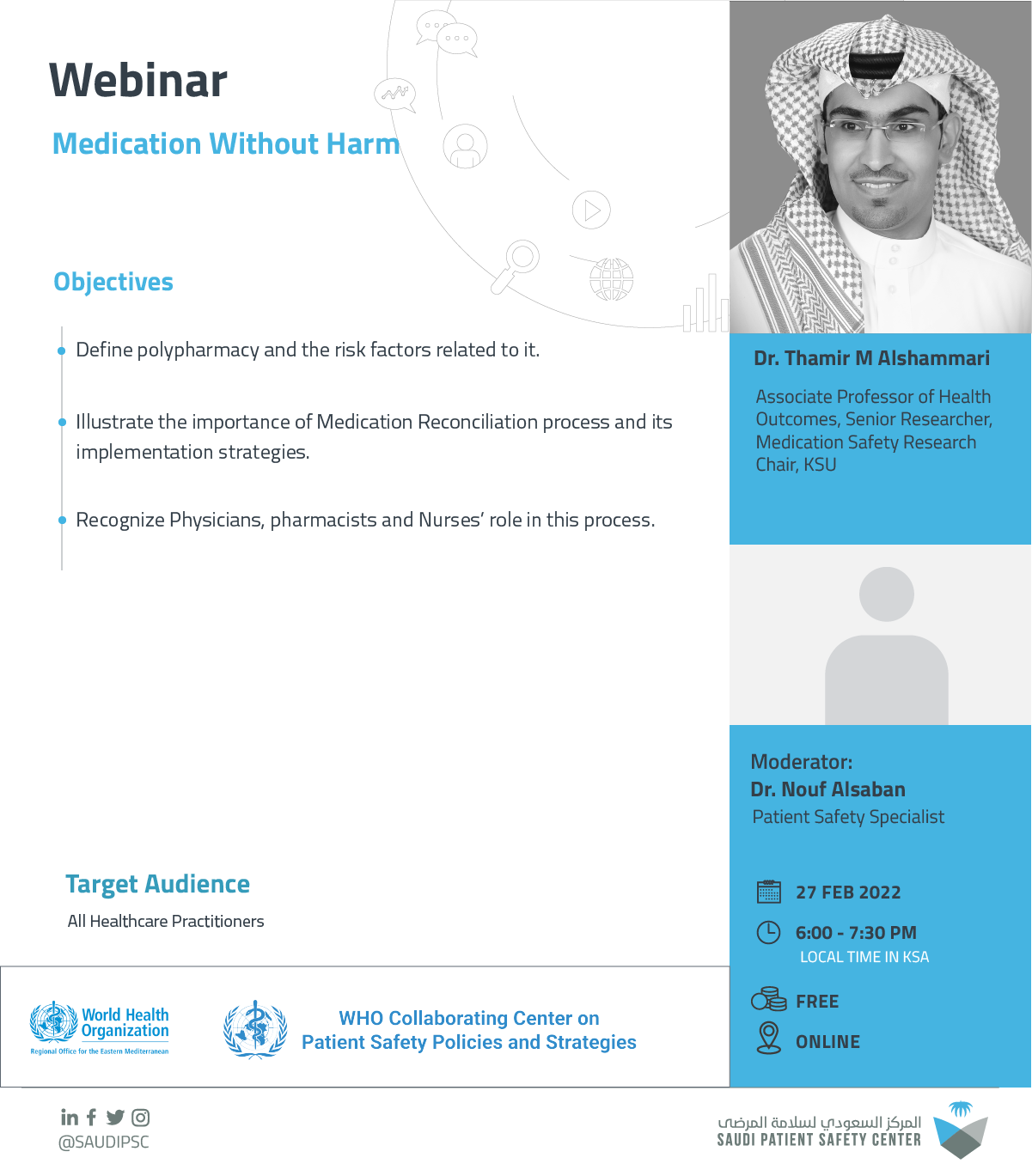
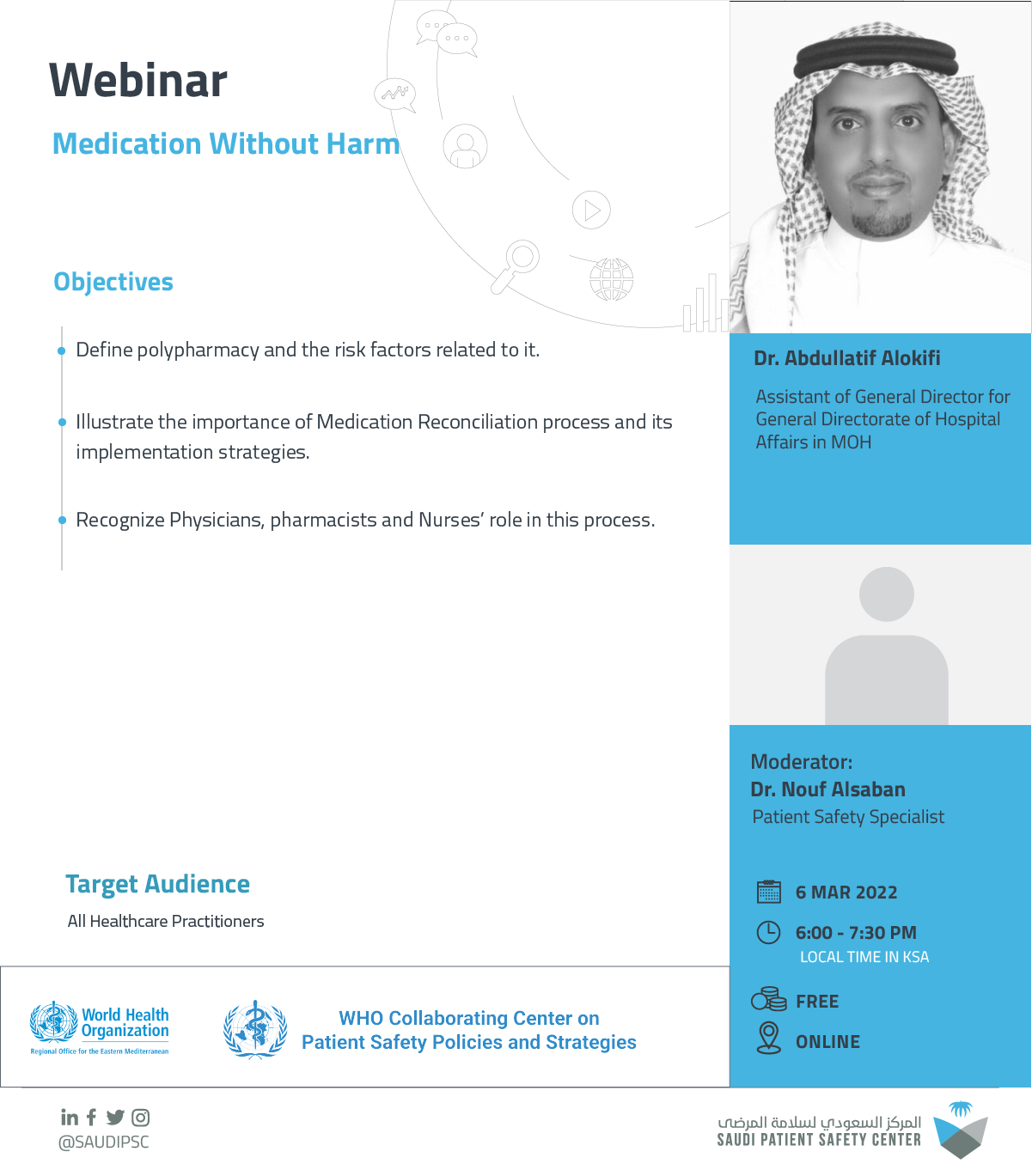
Aim: In alignment with the 3rd WHO Global Patient Safety Challenge Medication without Harm, this working activity aims to educate healthcare professionals about the importance of medication reconciliation in reducing medication-related harm.
Medication without Harm brochure
This course is done under the SPSC-WHOcc activities in alignment with the third WHO global patient safety challenge. One of the most critical activities that healthcare providers can perform to improve safety and quality during the transition of care is medication reconciliation. This program is a training framework that helps the participant to gain knowledge on the subject and be able to train and teach others. It summarizes the essential steps to conduct medication reconciliation in a healthcare setting utilizing the WHO-High 5- standard operating protocol and international Patient Safety and quality standards.
For more:
Home TOTprogram (spsc.gov.sa)
.jpg)
.jpg)
.png)
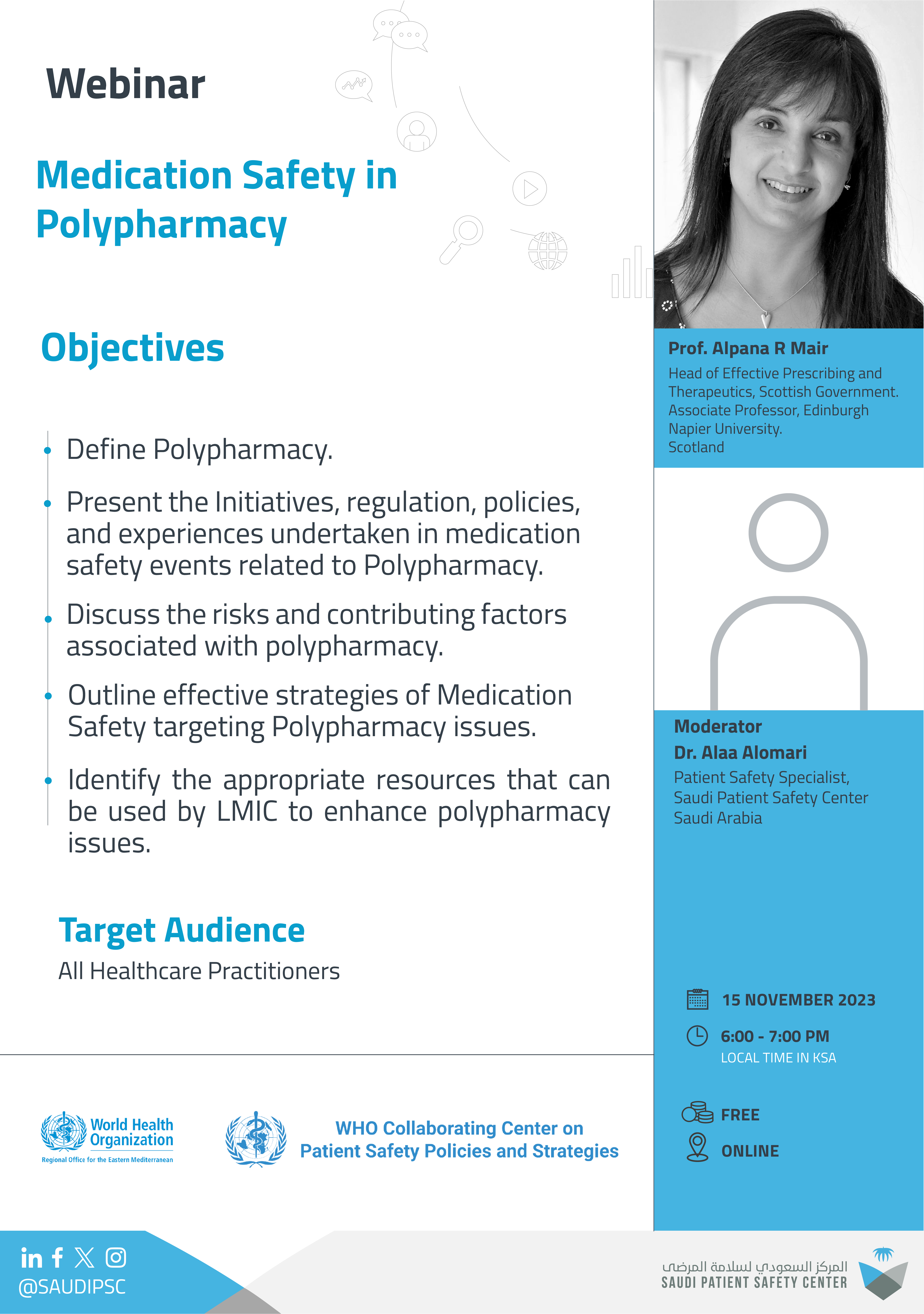
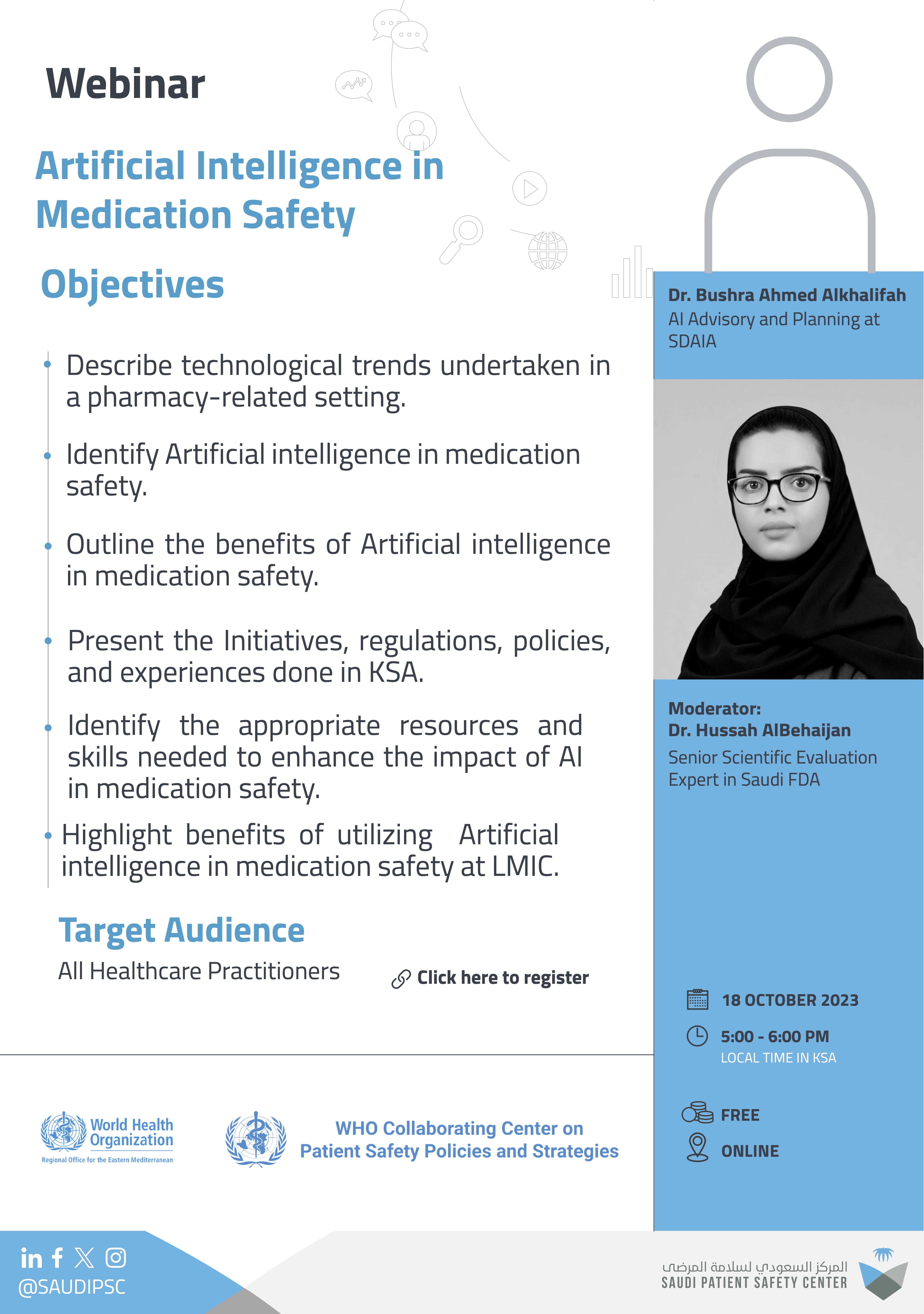
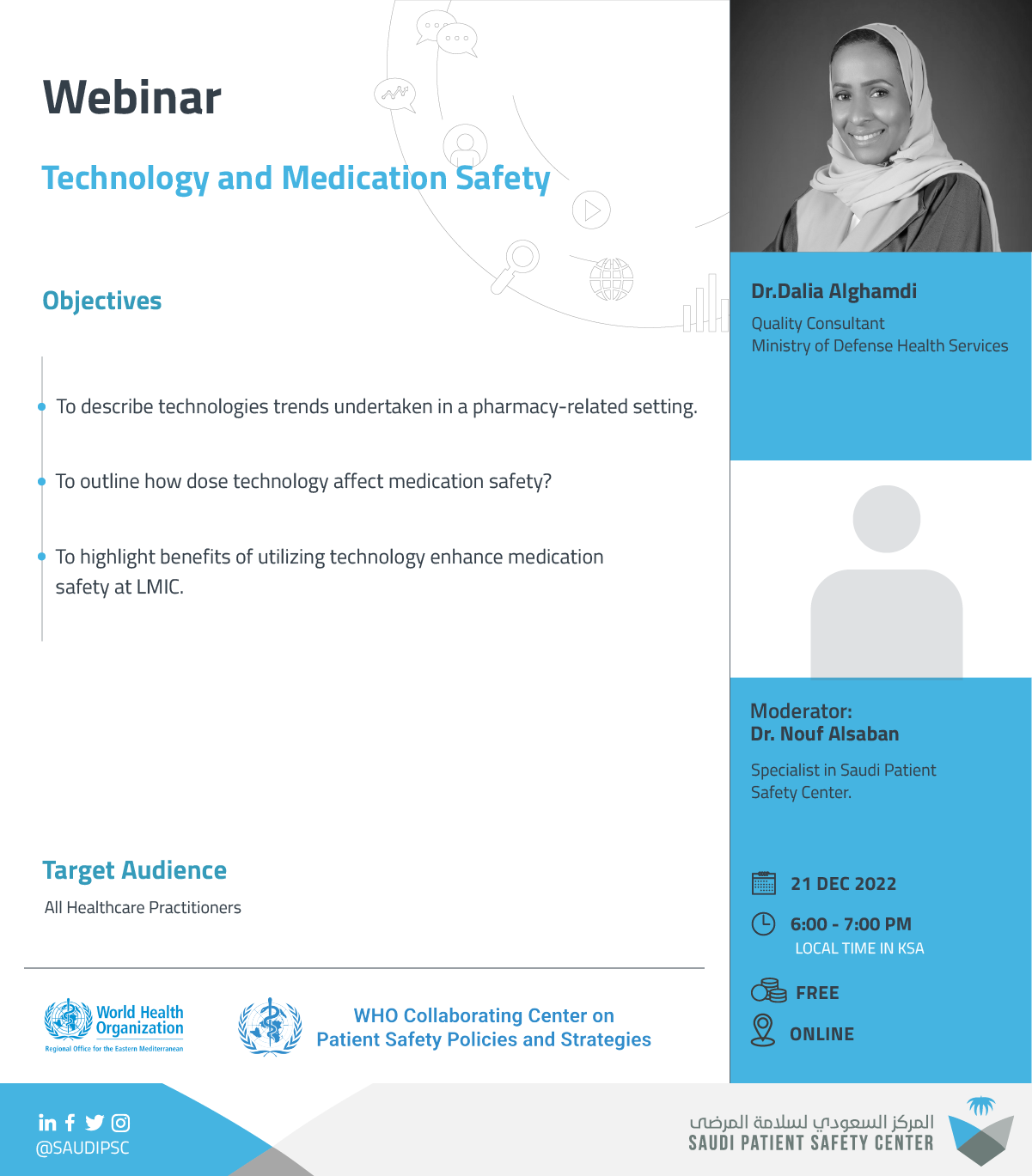
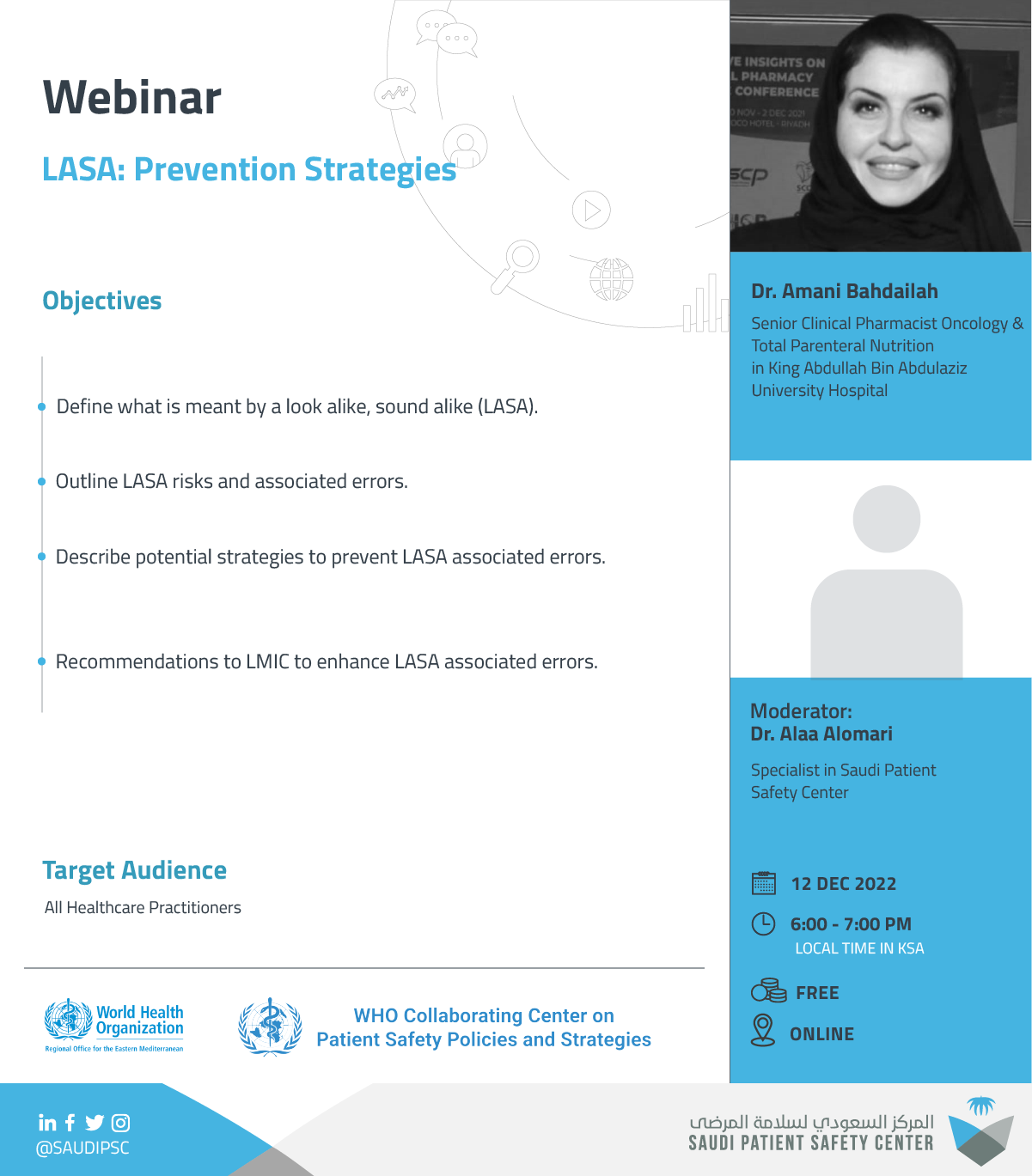
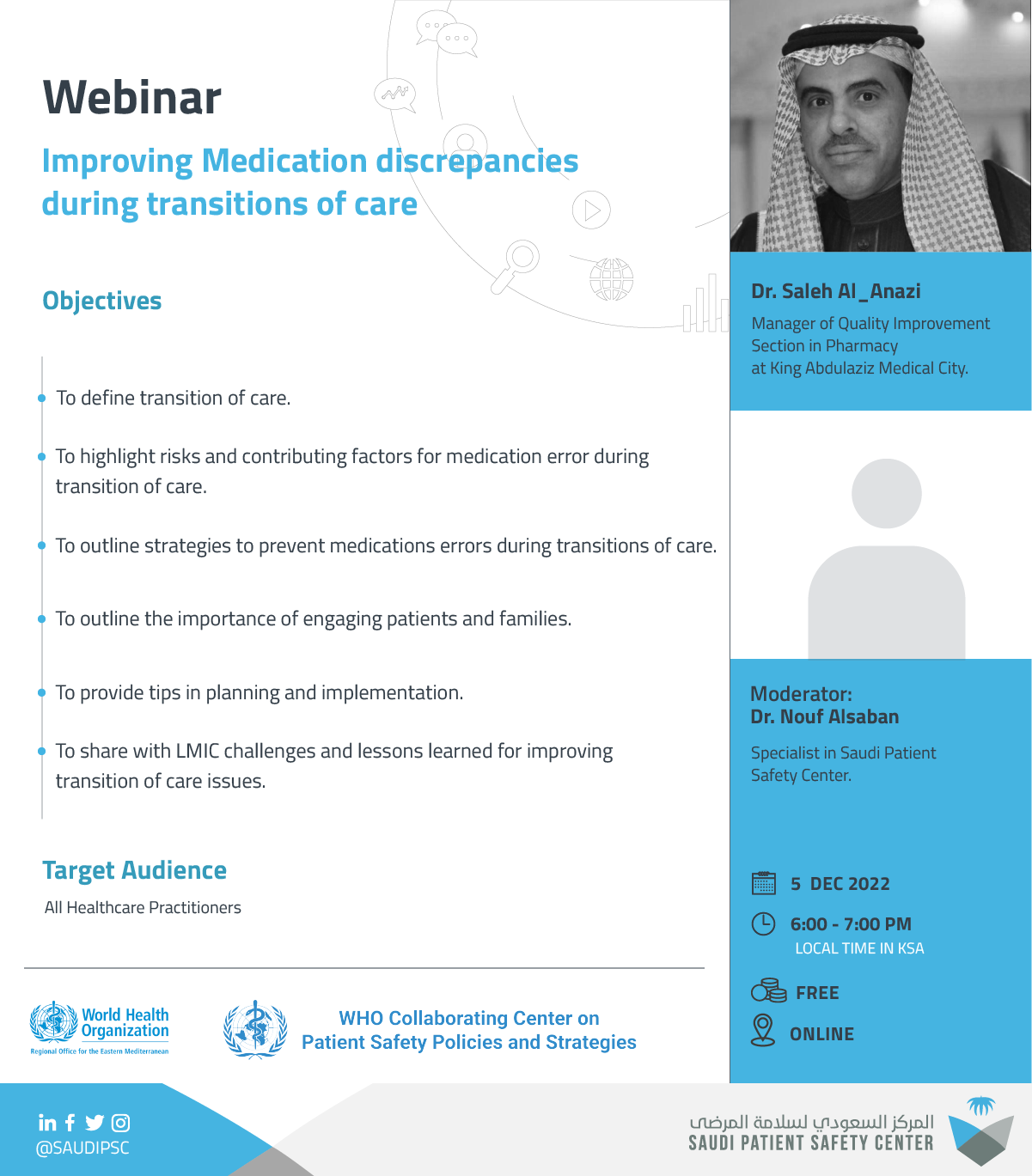
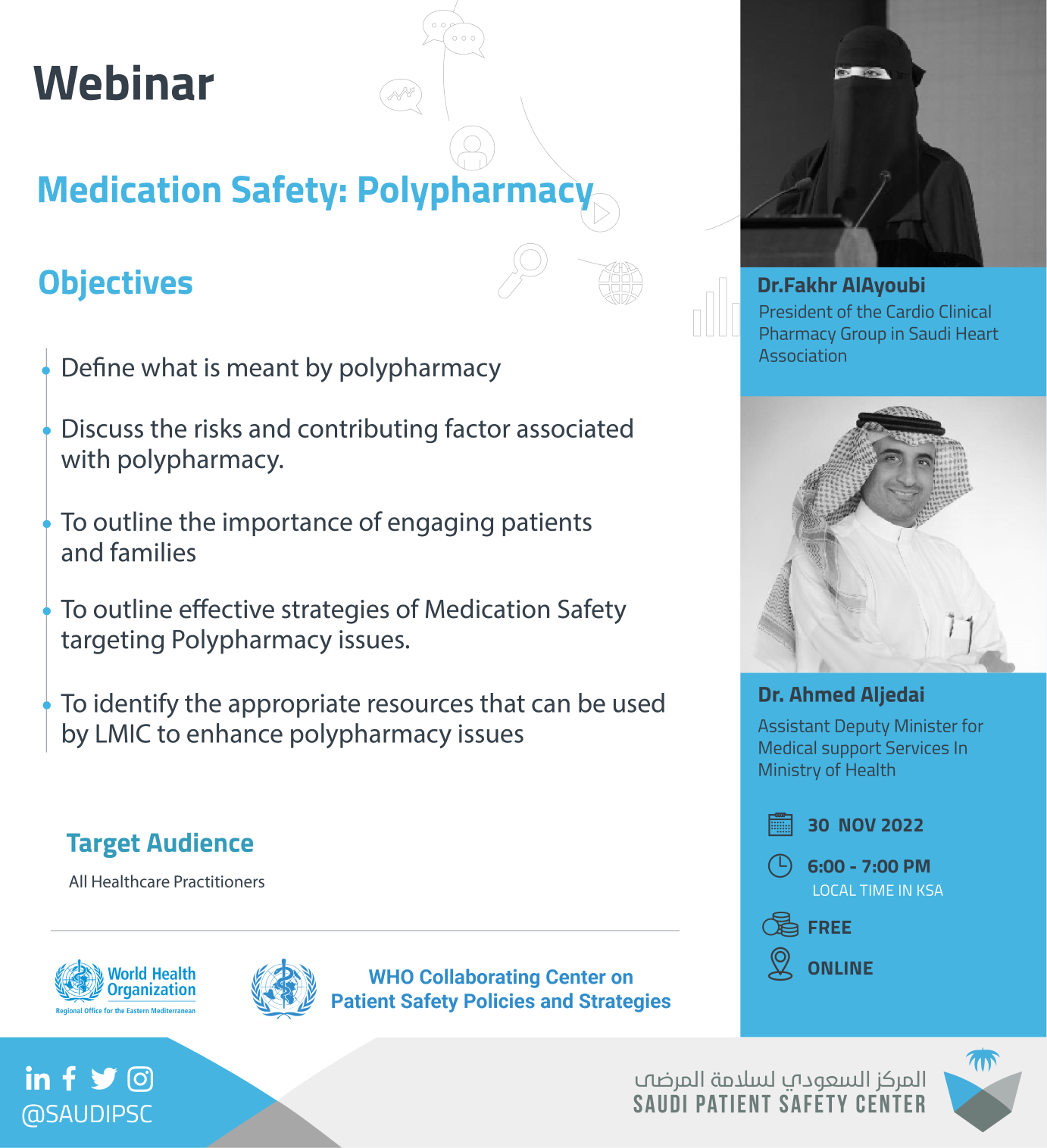
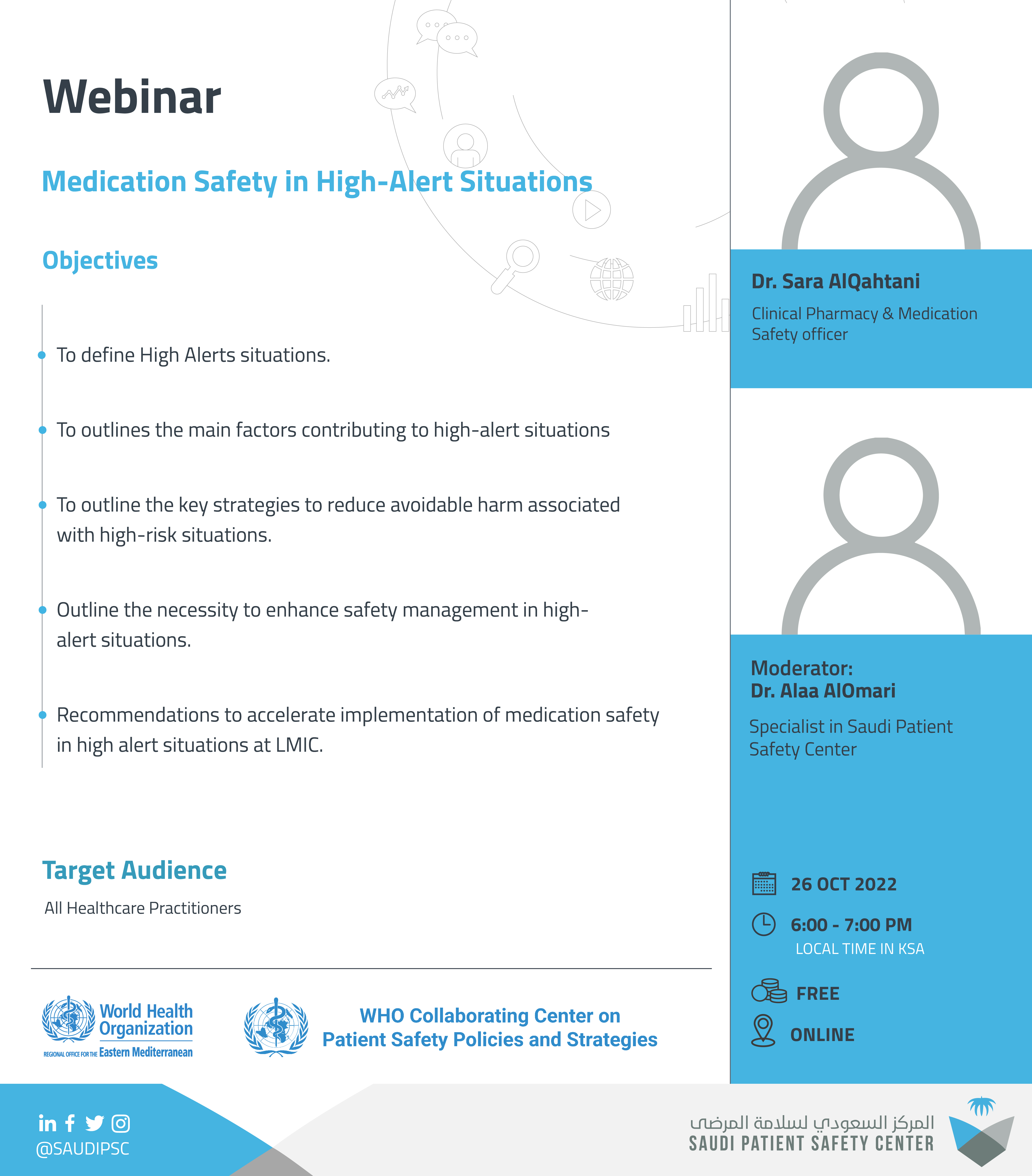
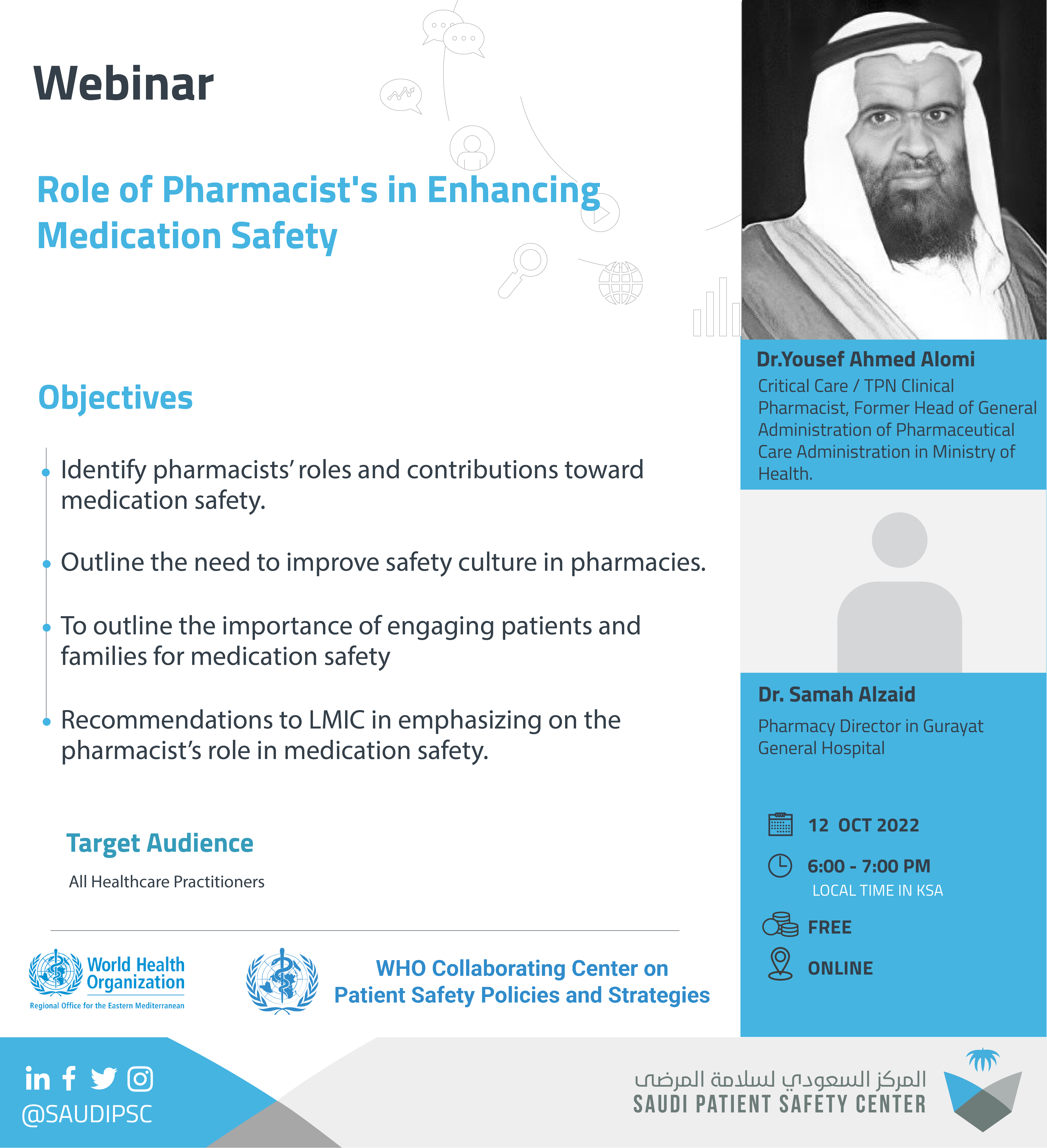
| MEDICATION WITHOUT HARM |
|
| Medication Reconciliation Patient-Centered Approach |
|
| Medication Reconciliation Patient-Centered Approach Training Guide |
|
| Training plan |
|
Resources:
| Patient Safety Caravan |
|
| Patient Safety Caravan toolkit |
|
| Patient Safety Caravan Arabic Materials |
|
| Patient Safety Caravan English Materials |
|
| Patient Safety Caravan Urdu Materials |
|
Taxonomy
Introduction
Key progress in the patient safety movement in the Kingdom of Saudi Arabia has been the call for a common language - a taxonomy - for categorizing medical events. The concept of a taxonomy combines terminology and the science of classification - in the case of patient safety, the Identification and classification of things that go wrong in health care, the causes why they occur, and the preventive approaches that can minimize their reoccurrence.
The Saudi Patient Safety Taxonomy was published in 2018, a comprehensive standard classification on patient safety events providing a structure for organizing information to be used for many purposes, including national statistics, descriptive studies, and evaluative research.
The purpose for developing a National Patient Safety Taxonomy
The purpose of the national classification for Patient Safety is to enable the categorization of patient safety information using standardized sets of concepts with agreed definitions, preferred terms, and the relationships between them. Furthermore, the Saudi Patient Safety classification has been designed to be genuine conjunction of national perceptions of the main issues related to patient safety and to facilitate the development of reliable organization - based, regional and national event reporting systems allowing for description, comparison, measurement, monitoring, analysis, and interpretation of information to improve patient care and its related policies. As a result, will enable setting up priorities in best practices in terms of patient safety and quality improvement initiatives.
The value of a Patient Safety Taxonomy
Presenting a unified and coherent structure for event reporting in Saudi Arabia through a working taxonomy conveys the message that the healthcare Sector will maintain a singular focus on the national detection, capture, analysis, and reporting of all aspects of medical events. Structuring patient safety information and sharing it in a structured way can support a deeper understanding of things that go wrong in health care, which could lead to the implementation of positive actions in a consistent fashion. It provides an infrastructure that will support the development of specific modules to address emerging patient safety concerns and facility-specific or regional interests. Moreover, standardized definitions found in the taxonomy are required to develop better quantitative and qualitative measures in patient safety. The Saudi Patient Safety Taxonomy could serve as a 'learning point' for developing countries that are falling behind to join the patient safety movement.
Introduction:
This manual is designed to outline the Saudi Patient Safety Center (SPSC) responsibilities and mandates in setting the mechanism for reporting of sentinel events as described in the Saudi Health Council resolution (5/83) dated 28/12/1439 H that is based on the Ministerial approval(64570) dated 1/12/1441 H. This manual provides healthcare facilities and healthcare facility governing sectors in the Kingdom of Saudi Arabia with a list of reportable sentinel events. It also provides a step-by-step guide that standardize the process of reporting and investigation and with focus on the facility's understanding of contributing factors to the event, culture's change and perception of staff, system failures, and process variabilities to reduce the probability of such an event in the future.
| Saudi Healthcare Sentinel Event Manual | |
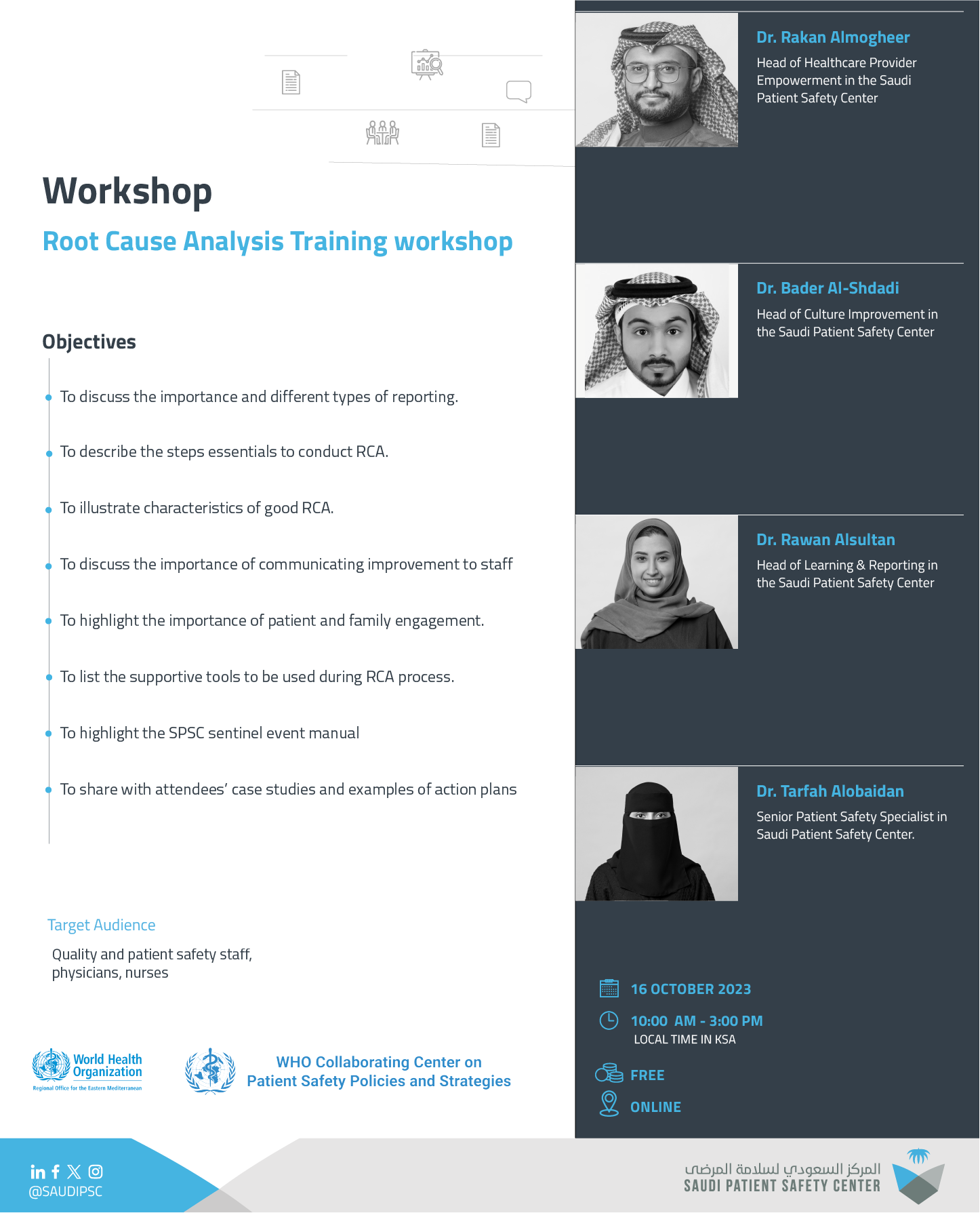
| Root Cause Analysis | |
Patients Safety Alerts
According to NHS, Patients Safety Alerts -PSAs- are designed to rapidly warn the healthcare system of risks. These alerts require action to be taken by healthcare providers to reduce the risk of harm or death
Objective:
Increase patient safety by Providing all healthcare providers with guidance to prevent potential incidents that may lead to harm or death.
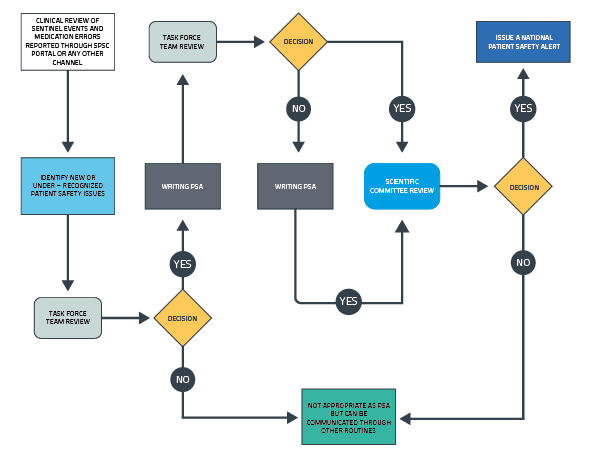
- Only issued for safety-critical issues (risk of death, permanent harm, or severe and temporary harm)
- Have a concise and clear explanation of the risk
- The required actions are assessed for feasibility, risk of unintended consequences, equalities impact, effectiveness, and cost-effectiveness
- The actions are SMART (specific, measurable, achievable, realistic, and timely)
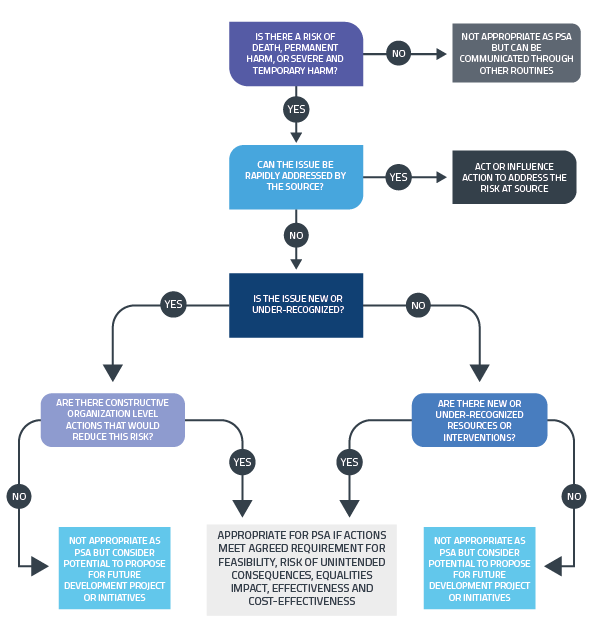
Patient Safety Alerts
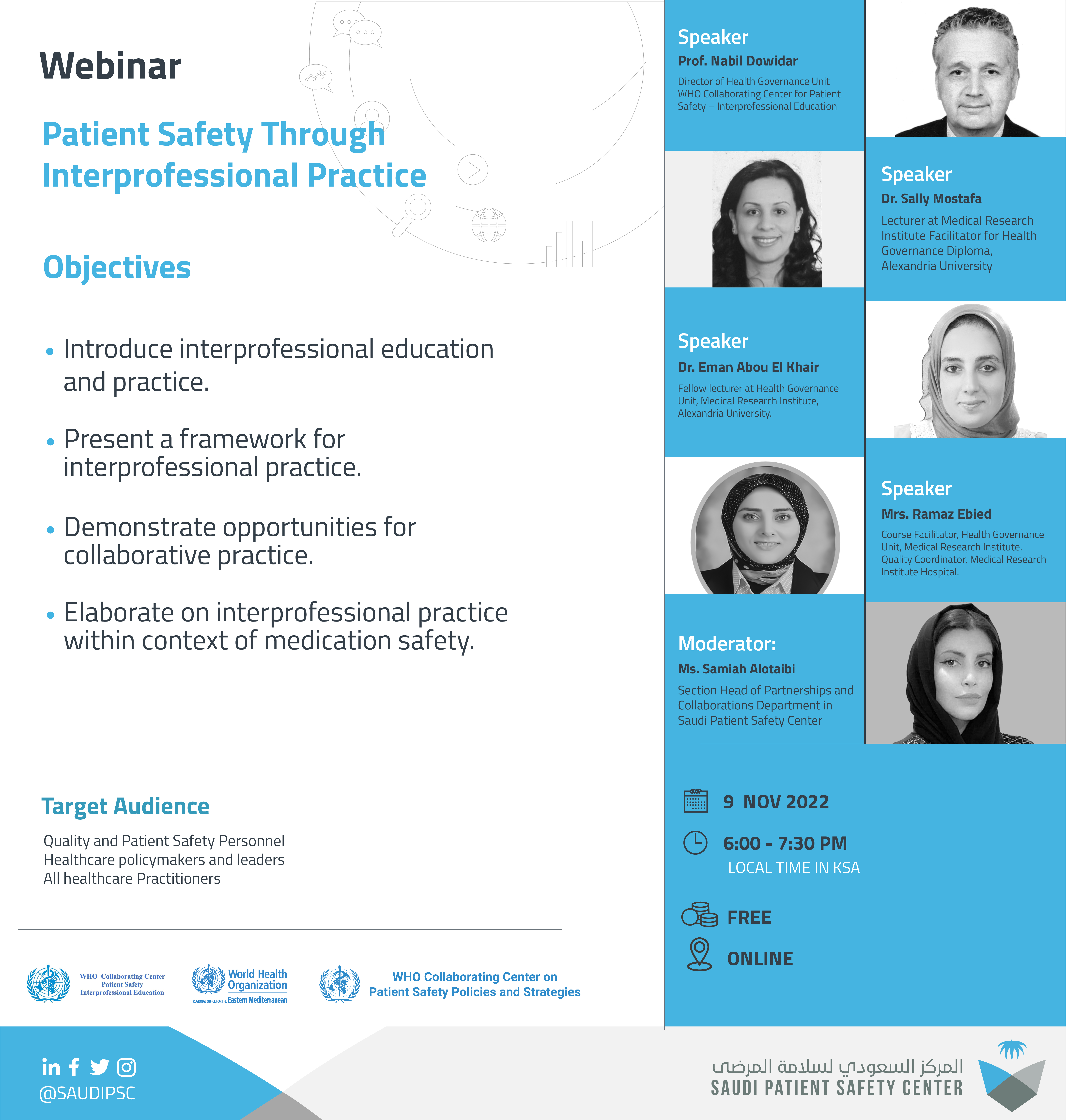
If you would like to learn more about the SPSC- WHO Collaborating Center on Patient Safety Policies and Strategies projects, please don't hesitate to email us: whocc@spsc.gov.sa
Or contact:
Mr. Anas Amr
Call: +966920033937